Independent comparisons. We may earn from shop links. More info

How to use ant powder

Updated: 22 October 2026

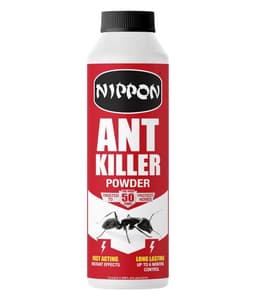
A thin trail runs from a patio crack to the gap under the back door, and the tub is already open. How to use ant powder, on a UK doorstep, is where the label lets you put a fine dust, which rate that pack prints, and what a shower does to the line. Peter F., editor for DIY & tools at productscompared.co.uk, followed the Nippon 150 g label, HSE No 5499, council sheets from Waltham Forest, Brent and Carlisle, and the amazon.co.uk reviews captured on 19 October 2026. No nest was tested. A qualifying purchase can earn a commission at no extra cost to you. The table is the [ant powder](/hub/pest-control/ant-powder) comparison.

A thin trail runs from a patio crack to the gap under the back door, and the tub is already open.

Our top picks

On this page

Find the nest or the way in

Follow the trail before you shake the tub. Fine soil between slabs can mark an entrance. Dust doorsteps, window frames, air bricks and gaps around pipes. Waltham Forest treats that as a barrier, and you should still see ants crossing it. If the nest is outside, dust the way in. Brent names cracks at frames, air bricks and pipes, and also a carpet edge. The carpet line is Brent’s, not permission for these powders. Read ant powder and pets before dust goes near food.

How the Nippon 150 g label says to dust

On the Nippon 150 g label, take the cap off, hold the bottle slightly downwards, lay a fine dust and replace the cap. Dust nests you can open, then tread them down. If you cannot, dust the entrances, plus doorsteps, frames and air bricks where ants enter. The crack-and-crevice rate is 20 g per square metre: a light film on a strip about a metre long and ten centimetres wide. Keep it out of food, cover fish tanks and water tanks, and keep it out of drains. If a gel is already down, read ant powder versus ant bait first.

Rates that must not be mixed

20 g/m² is the crack rate on the Nippon 150 g permethrin label. A maximum of 2 g per nest appears on Garden World’s page and on a deltamethrin Nippon label, UK-2017-1104. Those numbers are not interchangeable. The rate is the one on the pack in your hand. Do not mix boiling water into the same hole. If your tub prints no rate, do not borrow 20 g/m².

Rain, mess and caps

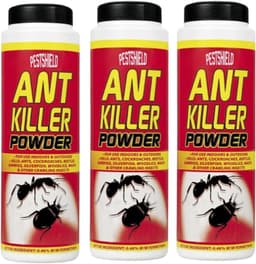
Garden World says not to apply Nippon powder in rain or wind. Reviewers say Zero In goes clumpy and Nippon washes off. If the film has gone, treat a dry surface again. Caps fail on all three brands, so replace the lid as soon as the film is down.

When to stop

Tiny yellow ants in a warm building can be Pharaoh ants. The British Pest Control Association says baiting is the control, because the colony splits, and that you should call a professional. A possible bat roost needs advice first, under the Wildlife and Countryside Act 1981 on the Nippon 150 g label. If powder is swallowed, use NHS 111 or 999 for a person and a vet for a pet. There is no dose here. Black ants at a visible entrance can stay a householder job when the label agrees.

Common questions

Do I dust the nest or only the trail?
Dust the nest if you can open it and the label tells you to dust and tread it down. If you cannot reach the nest, dust the entrances and the runs, cracks and crevices the label names. At a house, that usually means doorsteps, window frames and air bricks. A trail across a worktop is a sign to find the gap, not a surface to coat.
How much is 20 g per square metre, and does every tub use that rate?
On the Nippon 150 g label, 20 g/m² is the statutory rate for cracks and crevices. A metre of narrow crack takes a fraction of that, laid as a fine dust. A published 2 g per nest belongs to other Nippon wording, including a deltamethrin label, and it is not a substitute rate for every tub. Read the pack you are holding and use that figure.
Where do I put it if the nest is outside and the ants are in the kitchen?
Treat the access points the ants use to get in: cracks at the door frame, air bricks, pipe gaps and similar entry points, if your label allows them. You will still see ants while they cross a fresh barrier. Keep the dust off food and off food-contact surfaces. Brent’s suggestion to dust under a carpet edge is council wording, and it is not automatic permission for these ASINs.
Why are ants still walking after I treated?
Waltham Forest says you should still see ants, because they have to walk through the treated area, and that a colony is not cleared overnight. A contact powder hits the insects that cross it. It is not a same-day proof that the nest is dead. If the dust has been swept up or rained off, the ants are using a clean route.
What if it rains?
Leave the tub closed until the surface is dry. Garden World’s Nippon page says not to apply the powder in rain or wind. Reviewers report Zero In going clumpy and Nippon washing off after wet weather. When the film has gone, treat the dry surface again.
When do I stop and call someone?
Call a professional for tiny yellow ants in a heated building, because Pharaoh ants are a baiting job and a residual dust can split the colony. Take advice before you treat a possible bat roost. If powder has been swallowed, use NHS 111 or 999 for a person and a vet for a pet. Black ants at a visible patio entrance can stay a householder treatment when the label agrees.

Related pages

Sources

Public UK sources used for this comparison. Shelf prices, stars and review counts are the amazon.co.uk figures captured for these five listings. Last checked 19 October 2026.

  1. HSE, using biocides: overview (retrieved 19 October 2026)
  2. HSE, COPR conditions (retrieved 19 October 2026)
  3. Waltham Forest Council, garden ants (retrieved 19 October 2026)
  4. Carlisle City Council, ants (retrieved 19 October 2026)
  5. BPCA, Pharaoh ants (retrieved 19 October 2026)
  6. Nippon 150 g label, HSE No 5499 (retrieved 19 October 2026)
  7. Garden World, Nippon ant killer powder (retrieved 19 October 2026)
  8. GOV.UK, pest control on your property (retrieved 19 October 2026)