Independent comparisons. We may earn from shop links. More info

Pull up pants vs adult nappies

Updated: 21 October 2026

The search for pull up pants vs adult nappies usually starts because one word, nappy, has been used for two products. Pull-up pants go on like underwear. A taped slip lies open and fastens with tabs, which is what people mean by an all-in-one. If you can still pull clothing up and down yourself, a pant is the format to start with. If someone changes you lying down, or leakage is faecal or very heavy, a taped adult nappy is the safer start. This is about independence and how heavy the leak is, not about one brand beating another. Both shapes sit in the [TENA nappies](/hub/personal-care/tena-nappies) comparison. Lisa M. checked the listings on 21 October 2026. This is not a wear test, and a qualifying purchase can earn a commission at no extra cost to you.

The search for pull up pants vs adult nappies usually starts because one word, nappy, has been used for two products. Pull-up pants go on like underwear.

Our top picks

On this page

What each format actually is

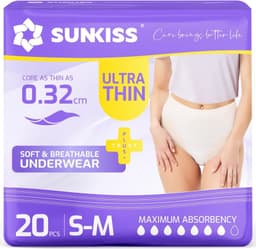
Incontinence pants or slips are not two names for one product. A pull-up is closed. You step into it, or someone helps you step into it, and it sits where underwear would. Carer guides such as DemCon describe pull-ons for light to quite heavy urine, and for a look closer to ordinary pants. A one-piece slip is the taped adult nappy. Bladder & Bowel UK describes that style as a product with tabs, and keeps it separate from a two-piece pad that only works with fixation pants. In this comparison the taped products are the MoliCare briefs, including the 8-drop listing, and the SUNKISS XXL tabbed brief. The pull-up side is the pant-style listings, including TENA and TENA Men pants and SUNKISS women's pants. MoliCare XL is marked 140–175 cm, with reclosable tapes, a wetness indicator, and faecal protection on the listing. A soiled pull-up cannot be refastened: you pull it down or tear the side seams.

When a pull-up pant is enough

A pant is enough when you can pull underwear up and down and you still toilet yourself. Millercare points pull-ups at mobile independence. Some local service sheets, including Newham-style notes, reserve pull-ups for people who can use the toilet and do not choose them for severe or double incontinence. Those sheets are local examples, not a national rule. Urine loss can be more than a light dribble. DemCon places pull-ons across light to quite heavy urine, so a pant is not only for the smallest leaks, though it is the wrong tool if you cannot get it on and off. Lying flat, the pant has to come down the legs or the side seams have to be torn. If you keep the pant, fit still decides leaks, which is what the how to fit page is for.

When a taped slip is the safer tool

Start with a slip if someone changes you lying down, if leakage is faecal, or if it is very heavy. Millercare groups slips with heavy loss, bowel leakage, night use, and assisted changes. DemCon makes the same split for heavier leakage and for changes while you are lying down. The MoliCare listing matches that job: faecal protection, reclosable tapes, and a wetness indicator a carer can check before opening the tabs. Pull-ups are harder for a carer at night because the pant is a loop. In bed it has to be worked down or the side seams torn. How to do that change sits on the overnight page. A pant at noon and a slip at 3am can both be right when mobility is not the same around the clock. You are choosing tapes, an indicator, more bulk, and the faecal line on MoliCare. You are not choosing a proven extra number of millilitres over Maxi pants.

One format first, with a limit

Order a pull-up if you can pull underwear up and down and the leak is urine you still manage while you are up and dressed. Order a taped slip if changes happen lying down, or the leak is faecal or very heavy. In this basket that slip is a MoliCare brief or the SUNKISS XXL tabbed brief. A slip is not an upgraded pant, and a pant is not a cut-down slip, if the only difference you can point to is the shape. You cannot read absorbency off the format alone. Do not wear a pad inside a pant to buy more. Fitting guidance says you do not put one product inside another. If mobility changes after the first order, change the format next time rather than doubling up. The buying guide is where you choose the listing inside that format.

Common questions

When is a pull-up the right format?
A pull-up is the right format when you can pull underwear up and down and you toilet yourself. It suits urine from light through to quite heavy, and it looks closer to ordinary pants than a tabbed brief. Some local sheets keep pull-ups for people who can use the toilet, though that is an example, not a UK-wide rule. It is the wrong first order if a carer changes you lying down, or if leakage is faecal or very heavy.
When is a taped slip the right format?
A taped slip is the right format when someone changes you lying down, or when leakage is faecal or very heavy. The tabs open flat. On a listing such as MoliCare they refasten, and a wetness indicator gives a check before a full change. That helps assisted care and bowel leakage more than a closed pant does, though the slip is bulkier under clothes.
Which products in this comparison are taped?
The taped products here are the MoliCare briefs, including the 8-drop listing, and the SUNKISS XXL tabbed brief. MoliCare XL is marked 140–175 cm, with faecal protection, reclosable tapes, and a wetness indicator on the listing. The pull-up side includes TENA, TENA Men, and SUNKISS women's pants. The women's pants are pull-ups. The XXL tabbed brief is a slip.
Can a pull-up handle bowel leakage?
Do not start with a pull-up when leakage is faecal. Start with a taped slip. Faecal protection is stated on the MoliCare listing in this comparison. A closed pant has to come down the legs or have its side seams torn, which is a poor way to manage bowel leakage in bed. If urine is the only leak and you still toilet yourself, a pant can still be enough.
Why are pull-ups harder for a carer at night?
A pull-up is a closed loop. At night the carer has to pull it down or tear the side seams while you are lying down. A slip opens on tapes and can be refastened, and a wetness indicator shows whether a change is due. The difficulty is the shape. One product by day and another at night is a normal pattern.
Is a slip always more absorbent?
A slip is not always more absorbent than a pull-up, and you should not assume a millilitre gap over Maxi pants. Some guides say slips can match pull-up absorbency. Others talk as if the taped shape always holds more. Use tapes, a wetness indicator, bulk, and faecal protection on the MoliCare listing. A gap at the leg will beat any extra capacity you only hoped for.
Can you wear a pad inside a pant?
No. Do not put a pad inside a pant, and do not put one product inside another. Fitting guidance rules that out, even if the leak has grown since you last ordered. If you need different containment, change the format or the listing. A taped slip is the move for faeces, a very heavy leak, or a change done lying down.

Related pages

Sources

Public UK sources for supply rules, hip bands, and absorbency language. Last reviewed on 21 October 2026.

  1. NHS incontinence products (retrieved 21 October 2026)
  2. UCLH incontinence pads (retrieved 21 October 2026)
  3. Royal Surrey continence service (retrieved 21 October 2026)
  4. TENA ProSkin Pants Maxi (UK professionals) (retrieved 21 October 2026)
  5. TENA Men Premium Fit (UK professionals) (retrieved 21 October 2026)
  6. TENA Pants fitting guide (retrieved 21 October 2026)
  7. AHPMA disposable continence product testing (retrieved 21 October 2026)
  8. Bladder & Bowel UK skin-care leaflet (retrieved 21 October 2026)