Zinc paint vs hot dip galvanising
A cut slot in a galvanised garden gate, a ground weld on a trailer chassis, or a bracket knocked bare in the van is a familiar job. The aerosol says cold galvanising, which sounds like the molten bath you already paid for. Zinc paint vs hot dip galvanising is the split between a coating you apply and hot-dip galvanising to BS EN ISO 1461. This page says when a can is a small repair and when the article should go back, and the product table is on the [zinc paint](/hub/paints-and-varnishes/zinc-paint) comparison. These notes use public UK technical sources from October 2026, and a qualifying purchase can earn a commission at no extra cost to you.
A cut slot in a galvanised garden gate, a ground weld on a trailer chassis, or a bracket knocked bare in the van is a familiar job.
A cut slot in a galvanised garden gate, a ground weld on a trailer chassis, or a bracket knocked bare in the van is a familiar job. The aerosol says cold galvanising, which sounds like the molten bath you already paid for. Zinc paint vs hot dip galvanising is the split between a coating you apply and hot-dip galvanising to BS EN ISO 1461. This page says when a can is a small repair and when the article should go back, and the product table is on the zinc paint comparison. These notes use public UK technical sources from October 2026, and a qualifying purchase can earn a commission at no extra cost to you.
Our top picks
| Badge | Product | Job | Finish | Dry time | Note | Price | Offer |
|---|---|---|---|---|---|---|---|
| Best overall |  Action Can Action Can ZG-90 500 ml | Colour match for fresh hot-dip galvanising | Silver, galv finish | Touch dry 2 minutes; hard dry 20 minutes at 20°C | 9.4 | about £10.77 | View offer |
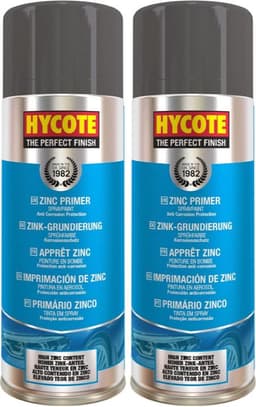
 Hycote Hycote XUK207 twin pack | Grey zinc primer | Zinc primer, matte | n/a | 8.4 | about £19.12 | View offer | |
| Best value |  Motip Motip M04061 400 ml | Zinc spray with cathodic prevention on the listing | Grey, matte | Dry time 4 hours. Full cure field 2 hours | 8.8 | about £8.96 | View offer |


On this page
Two different processes
When a repair paint is in the standard
Sacrificial protection is a requirement, not a slogan
When to send it back
Common questions
Is zinc paint the same as hot-dip galvanising?
When is a can an acceptable repair?
How small does the damage have to be?
How thick should the repair be?
Does a non-conductive colour-match spray meet a sacrificial repair?
What does C3 mean if a sheet mentions it?
When do you send the article back to a galvaniser?
Related pages
Sources
Public UK sources used for the repair and safety points on this page. Prices, stars and review counts are from the amazon.co.uk listings on 16 October 2026.
- Galvanizers Association — Repair of galvanized steel (retrieved 16 October 2026)
- Galvanizers Association — Coating repair datasheet (retrieved 16 October 2026)
- EGGA — Specification guidance (retrieved 16 October 2026)
- Action Can — ZG-90 (retrieved 16 October 2026)
- Motip — Zinc spray 04061 (retrieved 16 October 2026)
- Institute of Corrosion — Zinc-rich coatings (retrieved 16 October 2026)
- VOC in Paints, Varnishes and Vehicle Refinishing Products Regulations 2012 (retrieved 16 October 2026)
- HSE — Respiratory protective equipment in bodyshops (retrieved 16 October 2026)