Independent comparisons. We may earn from shop links. More info

Rasp vs file: which one should you use?

Updated: October 2026

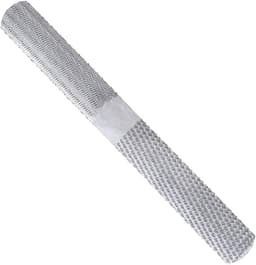
In a rasp vs file decision, look at the teeth before the handle or product title. A wood rasp has separate raised teeth that remove timber quickly and leave a visibly rough surface; a file has rows of lower cutting edges that refine wood more slowly or cut suitable metals. Amazon listings sometimes blur those names, especially when one set claims wood, metal and plastic. The practical rule is to rasp the shape, then file or sand the surface. Our [wood rasp comparison](/hub/paints-and-varnishes/wood-rasp) shows which captured products are dedicated rasps, hybrids or mixed file sets, while this page explains when each tooth pattern belongs on the work.

In a rasp vs file decision, look at the teeth before the handle or product title.

Our top picks

Shinto Shinto saw rasp L

Best overall

Shinto Shinto saw rasp L
8.8/10about £21.00
HAICN HAICN 4-in-1 rasp

Alternative

HAICN HAICN 4-in-1 rasp
7.2/10about £4.89
Amtech Amtech 3-piece rasp set

Best value

Amtech Amtech 3-piece rasp set
7.0/10about £4.75
On this page

The tooth matters more than the handle

Run your eye along a rasp and you will see individual points standing proud of the body. That open, aggressive cut makes a rasp effective on timber and leaves furrows that normally need a second process. A file uses regular rows or intersecting cuts rather than isolated points. On wood it takes a smaller, more controlled shaving and is useful after the rough form has been established. Profile describes the shape of the body; rasp or file describes the cutting surface. For grip, clamping and cleaning steps, use the guide on how to use a wood rasp.

What happens when you swap them

A file can shape wood, but its closer cutting edges tend to load with fibres, resin and dust more quickly. If you try to remove several millimetres from a door with a fine metal file, progress is slow and the packed teeth may score the surface. A wood rasp should not be treated as a metal file. Hard metal can blunt or damage the raised points, and a coarse rasp gives little control over a metal finish. When a marketplace listing says a three-rasp set is for “metal, wood and plastic”, the broad compatibility claim does not identify whether any face has a genuine file cut. If you mainly shape timber, the wood rasp buying guide will help you choose flat, half-round and round profiles without relying on a vague compatibility label.
Shinto Shinto saw rasp L

Testsieger

Shinto Shinto saw rasp L
8.8/10about £21.00

Four faces on one bar

A four-in-hand deliberately combines both tool types. The established pattern puts a rasp cut and a file cut on a flat face, then repeats those functions on a half-round face. Each working area is smaller than on a dedicated full-length rasp. The captured HAICN model follows that four-in-one idea at 20 cm. It was listed without a handle, so fitting a secure grip is part of the purchase rather than an optional comfort extra. One UK reviewer found the rasp faces aggressive on timber and the file faces able to work mild steel, but specifically did not present that as proof for hardened steel. Nor does a flat Shinto saw rasp become a four-in-one merely because it has coarse and finer faces: both Shinto faces remain rasps and both remain flat.

A file set with one rasp is a different purchase

The captured Presch six-piece set illustrates another source of confusion. It includes one half-round wood rasp alongside flat, round, triangular, square and half-round file shapes for broader workshop use. For a person who needs flat, half-round and round rasps for timber, five of the six pieces do not supply the missing rasp profiles. A three-piece dedicated rasp set may give more timber-shaping range than a six-piece mixed set, even at a much lower price.

Common questions

What is the main difference between a rasp and a file?
A rasp has individual raised teeth designed to remove wood and similar materials quickly. A file has regular cutting ridges that take a finer cut and can be made for wood or particular metals. Shape is separate: either tool may be flat, round or half-round.
Can a metal file shape wood?
Yes, especially for refining a surface after rasping, but it usually removes timber more slowly and can clog with fibres. Use it when control matters more than speed, clear it appropriately and avoid forcing a loaded file. For substantial stock removal, a wood rasp is the more efficient starting tool.
Can I use a wood rasp on steel?
Do not assume so. Raised rasp teeth intended for timber can dull or chip on metal. Use a suitable metal file unless the maker clearly identifies a dedicated file section for that material. A review reporting success on mild steel does not establish suitability for hardened steel.
What is a four-in-hand rasp?
It is a hybrid bar with four working sections: flat rasp, flat file, half-round rasp and half-round file. The layout lets you shape and refine flat or broad curved work without changing tools. Check that it has a secure handle and that the flat face bears properly.
Why does my file clog when I use it on wood?
Fine, closely spaced file cuts can pack with fibres, resin and dust. Stop before the spaces fill, then use the cleaning method recommended for that file. For rapid wood removal, change to a rasp whose raised teeth provide more chip clearance, then return to the file for refinement.
Do both tools cut on the push stroke?
Most conventional hand rasps and files are used with cutting pressure on the forward stroke and reduced pressure on the return. Exceptions depend on the maker and tooth design, so follow the tool's instructions. In every case, clamp the work and keep the stroke travelling away from your body.
When is one half-round rasp still better than a hybrid?
A dedicated half-round rasp gives you a longer continuous cutting face and often a more secure handled grip. Choose it for sustained shaping of broad hollows or curved furniture parts. A four-in-one wins on portability and versatility, but each of its four sections offers less uninterrupted working area.

Related pages

Sources

Public UK and manufacturer sources used for the tooth, handle and dust points on this page. Prices, stars and review counts are from the amazon.co.uk listings captured for this comparison.

  1. HSE — Wood dust (retrieved 17 October 2026)
  2. Consumer Rights Act 2015, section 9 (retrieved 17 October 2026)
  3. GOV.UK — General Product Safety Regulations 2005 (retrieved 17 October 2026)
  4. DIY Doctor — Using a rasp (retrieved 17 October 2026)
  5. Lee Valley — Files and rasps (retrieved 17 October 2026)
  6. ManoMano UK — Rasp and file buying guide (retrieved 17 October 2026)
  7. Paul Sellers — Two time-tested tools (retrieved 17 October 2026)
  8. Masuda — E1101 and E2101 listing (retrieved 17 October 2026)