Independent comparisons. We may earn from shop links. More info

Tung oil for a wooden worktop

Updated: October 2026

You are oiling a wooden worktop, chopping board, or salad bowl, and the question is when food may touch it. A tung oil worktop finish is a wiped oil the maker allows on those surfaces only after it has cured. Wiping steps are on [how to apply tung oil](/hub/paints-and-varnishes/tung-oil/sub/tung-oil-how-to-apply). Prices are on the [tung oil comparison](/hub/paints-and-varnishes/tung-oil). The Products Compared editorial team checked the listings and maker pages on 16 October 2026. We did not run a food-contact lab. A purchase through our links can earn a commission at no extra cost to you.

You are oiling a wooden worktop, chopping board, or salad bowl, and the question is when food may touch it. A tung oil worktop finish is a wiped oil the maker allows on those surfaces only after it has cured.

Our top picks

On this page

What a worktop oil has to do

A worktop gets water, alcohol, food acids, and a cloth every day. Tung oil, wiped thin and cured, is what these listings offer for that life.

Which tins in this set name food

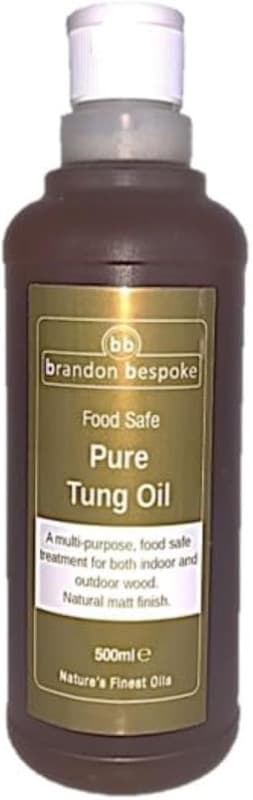
Food contact has to be on the tin, not assumed because the oil is natural. Libéron pure 1 litre, B000TAULGO, is £20.00, with 4.6 stars from 484 reviews. It states a 4-day full cure and names toys, worktops, and boards once cured. That is the clearest food line among the pure litres. The usage cell says Indoor while the title says exterior. Rustins 1 litre, £26.63, names kitchen surfaces and boards. Brandon’s 500 ml at £13.95 says food safe and names boards, then quotes about 15 m² and 160 m² in one cell. None of these tins is EN 71-3 unless the listing says so.

How long before food

Use the 4-hour figure only on the tin that prints it. Do not borrow a US brand’s multi-week cure and call it the UK maker’s number. Rustins wants more than 24 hours between coats, at about 15–25°C and not below 10°C.

Water, re-oiling, and the limits

After the cure, water should sit up rather than vanish into bare oak, if the coats match the maker’s count. It is not a lab waterproof rating, and one coat will not produce it. Lay oily cloths flat, or soak them in metal. Do not pile them. A hot rag is a fire. We will not claim Food Standards Agency approval. The 2008 food-contact regulations cited on an older Rustins sheet are revoked. Current England rules are the Materials and Articles in Contact with Food (England) Regulations 2012. That is the frame, not a certificate for any ASIN here.

Common questions

Can I use tung oil on a kitchen worktop?
Yes, when the tin names worktops or food contact and you wait for its cure. Libéron pure 1 litre at £20.00 names worktops and boards once fully cured, and states four days. Rustins 1 litre at £26.63 names kitchen surfaces and is not for the floor beside them. A tin that never mentions food, or a mineral oil, is a different buy. We did not lab-test waterproofing.
How long before I prepare food on it?
For Libéron pure oil, wait out the 4-day full cure on the 1 litre listing, after the coats. For quick-drying Libéron oil, the maker says 24 hours after the final coat. Rustins wants more than 24 hours between coats in a room at or above 10°C. A food-safe bullet does not mean the board is ready the same evening. Soft oil is not the cured surface those lines describe.
Which oil if I need the board this weekend?
Quick-drying oil is the shorter clock, and it may still miss a same-day meal. Libéron times about four hours between coats and 24 hours after the last. Pure oil needs a day between coats and a few days before use. If the board must be in service on Sunday and it is bare on Saturday, neither schedule is a morning finish. The 250 ml that prints the 4-hour dry has two reviews. Do not treat those stars as the reason to choose it.
Will it stop water staining?
Several cured coats are what the listings call water resistant. Libéron also names heat, alcohol, and food acids. One coat will not do that, and we are not claiming a lab test. Wipe standing water. Re-oil when washing leaves the surface looking dry. A white ring in the first week is usually unfinished cure, or oil that was left thick.
How often do I re-oil?
At least once or twice a year on Libéron’s guidance, and sooner on a board that sees the sink every day. Clean the wood first. A flood over a greasy top seals the dirt in. Exterior oak, if the tin allows it, follows the same maintenance. Re-oiling is thin wiped coats on bare, clean timber, not a new product on top of mineral oil or a varnish you never removed.
Is it the same as worktop oil or mineral oil?
No. Mineral oil does not cure and was excluded from this set. Oils sold as worktop oil, including lines retailers place beside tung oil, have their own labels. Danish oil is a blend and is not a row here. Use a tung oil tin that names the food job, or read the Danish-oil page if you want the faster blend. The names are not interchangeable because all three can sit on oak.
What about a nut allergy, and the floor?
Libéron warns that tung oil comes from nuts and may cause an allergic reaction. A food-contact line is not a medical clearance. If someone who eats from the wood has a nut allergy, choose a finish without that warning. The Rustins tin is also not for the floor next to the worktop. The 2024 label says not for floors. Kitchen surfaces can still take it if you accept the Brown colour cell and the interior limit.

Related pages

Sources

Maker pages and UK public sources for coverage, dry time, food-contact wording and rag fires. Prices, stars and review counts are the captured amazon.co.uk lines. This page does not report a laboratory test.

  1. Libéron — Pure tung oil (retrieved 17 October 2026)
  2. Libéron product guide 2024 (retrieved 17 October 2026)
  3. Rustins data sheet, March 2018 — Pure tung oil (retrieved 17 October 2026)
  4. Rustins 2024 label — Tung oil (retrieved 17 October 2026)
  5. Rustins safety data sheet — Tung oil (retrieved 17 October 2026)
  6. East Sussex Fire and Rescue Service — Fire hazards of linseed oil (retrieved 17 October 2026)
  7. Toys (Safety) Regulations 2011 (retrieved 17 October 2026)
  8. Materials and Articles in Contact with Food (England) Regulations 2012 (retrieved 17 October 2026)