Metal paint buying guide
You are standing in front of a rusty garden gate or a scuffed radiator, and every result says metal paint. Some results are a 30 ml bottle with a brush in the cap. Some are a 250 ml or 750 ml tin of outdoor enamel. A radiator enamel is a third product, and it is not among these seven listings. This metal paint buying guide sorts those three jobs and the pack that can cover each one. The [metal paint comparison](/hub/paints-and-varnishes/metal-paint) holds the prices, stars and review counts. Peter F. updated this page on 23 October 2026 from amazon.co.uk listings. We did not run a lab test. A qualifying purchase through our links can earn a commission at no extra cost to you.
You are standing in front of a rusty garden gate or a scuffed radiator, and every result says metal paint. Some results are a 30 ml bottle with a brush in the cap. Some are a 250 ml or 750 ml tin of outdoor enamel.
You are standing in front of a rusty garden gate or a scuffed radiator, and every result says metal paint. Some results are a 30 ml bottle with a brush in the cap. Some are a 250 ml or 750 ml tin of outdoor enamel. A radiator enamel is a third product, and it is not among these seven listings. This metal paint buying guide sorts those three jobs and the pack that can cover each one. The metal paint comparison holds the prices, stars and review counts. Peter F. updated this page on 23 October 2026 from amazon.co.uk listings. We did not run a lab test. A qualifying purchase through our links can earn a commission at no extra cost to you.
Our top picks
| Badge | Product | Job | Pack | Rust claim | Note | Price | Offer |
|---|---|---|---|---|---|---|---|
| Best overall |  Hammerite Hammerite 5158235 smooth black | Direct to rust | Title 750 ml; size field 1 l | Long lasting | 9.4 | about £20.43 | View offer |
| Best value |  Hammerite Hammerite smooth black 250 ml | Direct to rust | 250 ml | Up to 8 years | 9.2 | about £9.97 | View offer |
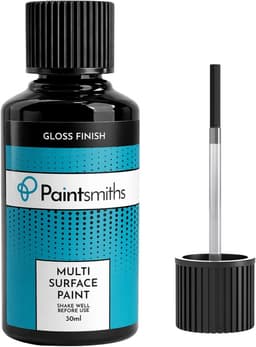
| Alternative |  Paintsmiths Paintsmiths gloss black 30 ml | Touch-up | 30 ml | Not stated | 8.4 | about £8.79 | View offer |


On this page
Three products share the name
Metal first, then weather
What the saved prices are really buying
What to leave on the main table
Common questions
Is a small touch-up bottle the same paint as a gate tin?
When is 250 ml enough, and when do I need 750 ml?
Can I use outdoor metal paint on a radiator?
Does direct-to-rust stick to galvanised steel?
What does the eight-year line actually mean?
Related pages
Sources
Public sources from the research digest, last checked on 22 October 2026. Shelf prices and star lines are the stored amazon.co.uk figures. The price band is this set, not a market average. No listing was lab-tested.
- Hammerite Direct to Rust metal paint, smooth finish (retrieved 22 October 2026)
- Hammerite surface preparation (retrieved 22 October 2026)
- Hammerite: how to paint a radiator (retrieved 22 October 2026)
- VOC in Paints, Varnishes and Vehicle Refinishing Products Regulations 2012 (retrieved 22 October 2026)
- HSE: lead in paint (retrieved 22 October 2026)
- HSE: GB CLP hazard labels (retrieved 22 October 2026)
- SteelConstruction.info: standard corrosion protection systems (retrieved 22 October 2026)
- Rust-Oleum UK radiator paint (retrieved 22 October 2026)