Independent comparisons. We may earn from shop links. More info

How to wear a hard hat

Updated: October 2026

The helmet is already in the van, and it still fails people who tip the peak back, leave the wheel loose, or keep a shell that has taken a knock. This is how to wear a hard hat in the sense HSE describes: level, peak forward, tight enough to stay, and out of service when the plastic or the date says so. Marks and prices are on the [construction helmet comparison](/hub/occupational-safety/construction-helmet). Whether you bought the right standard is on the [hard hat buying guide](/hub/occupational-safety/construction-helmet/sub/construction-helmet-buying-guide). We used HSE L25, the CIS50 helmet note, JSP’s cleaning advice, and the UK review themes in this set. Follow the leaflet in your own shell, then the limits below. A strap that must hold in a fall is a different decision, on the [hard hat for working at height](/hub/occupational-safety/construction-helmet/sub/construction-helmet-working-at-height). A purchase through our links can earn a commission at no extra cost to you.

The helmet is already in the van, and it still fails people who tip the peak back, leave the wheel loose, or keep a shell that has taken a knock.

Our top picks

On this page

Put it on level

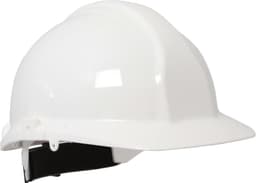
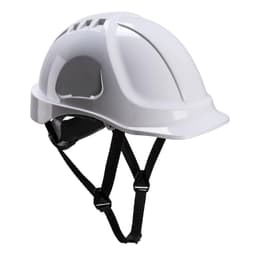
HSE’s guidance is to wear the brim level and not back to front. EU-OSHA’s note says the shell and harness are designed peak-forward. Some North American pages allow a reverse mark. That is their rule. On a British site the peak stays at the front unless your shell is marked for reverse wear, including when you are only nipping up a ladder. Open the wheel or the slip ratchet, seat the harness clear of your ears, then tighten until a nod does not shift the shell. It should not crush your temples. The JSP EVO2 listing is a slip ratchet, which slides rather than clicks. A wheel, as on the Centurion and in the Portwest bullets, is the dial people praise when it works with gloves. Look down and look up. If the shell tips, it is still loose or the harness is twisted. The reviews show a third case: the tightest setting is still too big. A PS54 reviewer said it fell off on the minimum and the chin strap would not shorten. A PS53 review says the strap does not go short enough and the shell sits high. A Centurion review says the adjuster snapped on day one, and another says there was nothing to fasten. On the white HEARMOR, the rear adjustment sits awkwardly and the hat never feels secure. On the black one, a buckle comes loose and the fit goes slack. Wearing the peak backwards fixes none of that. If the minimum is still loose, that helmet does not fit you. A folded sweatband is not a smaller size. CIS50 suggests a chin strap when you bend, look up, or work in wind. That can still be an EN 397 strap, designed to release if it snags. Use the strap supplied. Do not knot it shorter, and do not add a climbing strap to an industrial shell because a forum quoted a higher force.

Check the shell and the harness

Look at the shell in daylight before the shift. A deep crack, a brittle patch, a dent, or frayed webbing is the end of that helmet. JSP’s note is a daily look for cracks, which matches HSE’s inspect-before-use line. If the harness insert has come out of the shell, as Portwest reviewers describe, refit it as the maker shows or retire it. A suspension that is not seated does not keep the shell off your skull. The buckle is part of the inspection. A snapped Centurion wheel, or a HEARMOR buckle that opens when you shake your head, means the helmet is faulty, not merely loose. A cable tie through a broken dial is not a spare part. Do not drill the shell for a lamp, stick unofficial pads inside, or paint it. CIS50 lists those, and using the shell as a basket, among the ways a helmet is damaged. A lamp belongs in a slot the helmet was built with. Mervex reviews say the supplied holder does not lock and that a lamp was lost at height. Hearing protection has to be a pair the helmet was designed to take, so both still work. A visor clip that broke in the first week, as on one HEARMOR kit, means the visor is finished even if the shell looks new. A baseball cap under the harness stops the cradle sitting where it was tested. One buyer of the white HEARMOR was unsure about a supplied bandana. Leave it out unless the instructions say it is part of the fit. A weather hood goes where the maker allows, not inside the suspension.

Clean and store it

Clean the inside, and clean or replace the sweatband, which is HSE’s line. JSP’s note is soap and water, not solvents. Follow your leaflet if it is stricter. Centurion advertises a washable headband, so that band can come out. A cooling liner, as on the HEARMOR De-voltekvent, is washed on its own terms and not left soaking in the shell. Store the helmet out of sun and heat. CIS50 is explicit about a rear shelf. A hook out of the glass is the ordinary fix. Do not pile tools in the shell, and do not use solvents on the plastic. The date still matters when the shell looks clean. HSE’s general guide is three years from manufacture, and follow the maker. JSP states up to five years in use inside a ten-year total. The Centurion listing says five years. The PS53 bullet says up to seven years from manufacture. A clean helmet past that limit is finished.

When the helmet is finished

Retire it after a significant impact, even with no visible crack. L25 is the source, including deep cracks and other severe damage. The PS53 review of a helmet that fell from scaffolding and broke is one person’s story, not a rating of the model. The rule is the same for a fitting that glanced off the peak: that shell is out. If you are unsure whether the knock was significant, retire it. Also retire it when the harness will not hold, the adjuster is broken, the minimum size is still loose, or the in-use date has passed. A sweatband is a repair. A cracked crown is not. If the method names a mark your shell does not carry, ask the site lead.

Common questions

How tight should the wheel be?
Tight enough that a nod does not shift the shell, and loose enough that you are not marking your forehead within ten minutes. Seat the harness, close the wheel or slip ratchet, then look down and up. If the tightest setting is still loose, the helmet is too big. Do not add a cap to fill the gap.
Can I wear the peak at the back?
Not as UK default practice. HSE says wear the brim level and not back to front. The shell is arranged peak-forward. A reverse mark on some North American helmets is not a reason to spin a British site helmet unless that shell says reverse wear is acceptable.
Can I wear a baseball cap or a bandana underneath?
Not unless the maker says that layer is part of the fit. A cap keeps the suspension off the head. A reviewer wondered about the bandana supplied with the white HEARMOR. Leave extra fabric out. A hood belongs where the instructions place it, not stuffed into the cradle.
How do I clean the sweatband?
Soap and water, then dry it. JSP states that and warns against solvents. HSE expects the band cleaned or replaced regularly. If the band is removable, as Centurion describes, wash the band rather than flooding the shell. Do not use paint stripper or white spirit on the plastic.
What if it still falls off on the smallest setting?
That helmet does not fit. PS54 and PS53 reviews describe a minimum that is still too large, or a strap that will not shorten. A snapped Centurion adjuster, or a HEARMOR buckle that opens, is a fault. Get a different size or model. Do not drill, pad, or knot the strap.
Do I replace it after a knock that left no crack?
Yes, if the impact was significant. L25 takes a helmet out of service after a severe blow, not only after you can see a split. A light brush on a door frame is not a brick or a fall. If you cannot tell which you had, retire it. The date clock does not reset an impact.
Can I drill a hole for a lamp?
No. Drilling and painting are listed among the ways a helmet is damaged. Use a slot the helmet was built with, and check that the mount locks. On the Mervex, reviews say the holder does not lock and a lamp was lost at height. A drilled hole is not the repair for that.

Related pages

Sources

Public UK sources from the research digest, last checked on 19 October 2026. Shelf prices and star lines are the amazon.co.uk figures in the display file. The price bands are this set, not a market average.

  1. HSE: construction PPE FAQ (retrieved 19 October 2026)
  2. HSE: L25 PPE at work guidance (retrieved 19 October 2026)
  3. HSE: chainsaw PPE (retrieved 19 October 2026)
  4. HSE: PPE selection and use (retrieved 19 October 2026)
  5. GOV.UK: PPE enforcement regulations 2018 (retrieved 19 October 2026)
  6. JSP: when to replace a safety helmet (retrieved 19 October 2026)
  7. Health & Safety Matters: a head for safety (retrieved 19 October 2026)
  8. Uvex UK: EN 397 and EN 12492 (retrieved 19 October 2026)