Independent comparisons. We may earn from shop links. More info

Anti-static wrist strap for a PC build: strap or hand

Updated: 16 October 2026

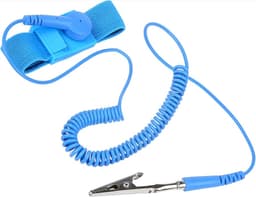
The case is open on a desk, the RAM stick is still in the packet, and you are not sure whether a strap is compulsory before it goes in. An anti-static wrist strap PC build is one of two ways UK notes describe sharing potential with the chassis. The other is your hand on bare metal. Both still need the machine off. The six straps are on the [anti-static wrist strap comparison](/hub/occupational-safety-accessories/anti-static-bracelet). The Products Compared editorial team updated this page on 16 October 2026 from UK build notes and the listings. We did not lab-test a PC, and we are not quoting a damage rate. A purchase through our links can earn a commission at no extra cost to you.

The case is open on a desk, the RAM stick is still in the packet, and you are not sure whether a strap is compulsory before it goes in.

Our top picks

On this page

What UK build notes actually require

Offtek’s RAM guide says that before the new stick goes in, you either keep a hand on unpainted chassis metal or you wear a corded band. It says a band can cost a couple of pounds, which matches the about £3.29 to about £5.99 rows in this set. SCAN’s RAM steps talk about the slots, the edges, the notch, and the click, and do not mention a strap. SCAN’s ESD note still wants the PC plugged in and switched off at the wall. Neither page gives a percentage of home builds damaged by static. A strap is a method, not a requirement written down as compulsory. Both methods fail if the case is painted and the PC is switched on.

The desk, the carpet, and the bag

Tekeurope’s build note says not to work on carpet, and it recommends a strap to a mat if you have one. This category does not sell that mat. If you have no mat, Tekeurope says you can park the motherboard on the anti-static bag it came in, and put that bag on the box. The bag is a rest, not a wrist strap, once you pick the board up. Hold the memory by the edges, with the notch lined up, which is the handling both Tekeurope and SCAN describe. Carpet under the bench is what Tekeurope rules out, even with a strap on your wrist. The strap does not cancel that advice, and it does not fix a coil that will not reach.

Power off, then touch the board

Use the pattern SCAN’s ESD note and Lindy’s sheet 40165 share: mains lead in the socket, power off at the wall, then contact with the chassis. A silent beep, and the difference between a resistor and a broken cord, is on the how to ground an anti-static wrist strap page. Switch off first. Share potential with bare metal, either with the strap or with a hand that stays on the chassis while you handle the part. Then seat the RAM by the edges until it clicks. A strap does not repair a stick or a card you have already damaged. If the cord will not reach, the bench layout is the problem.

If you still want a strap from this set

PC-build comments in the reviews sit mainly on two rows. FEITA’s title says 8 feet, which is the long lead, and the same reviews include open circuits, so a long title is not a tested cord. HDXH’s reviews call the lead short for a radiator. If your earth is the chassis on the desk, that short lead may be enough. If you were hoping to clip across the room, it may not. ECO-FUSED is the listing that prints a mains warning. This page does not rank all six. Choose the row on the best-strap page, and use the buying guide if the cord length or the resistor was never printed. A couple of pounds buys a corded band in this set. It does not replace a hand on bare metal if you would rather work that way. Either way the machine stays off.

Common questions

Do I need a wrist strap to install RAM?
Not according to the UK notes gathered here. Offtek allows a hand on unpainted chassis metal instead of a corded band. SCAN’s RAM steps do not mention a strap at all. SCAN’s ESD note still wants the machine at earth, plugged in and off at the wall. A strap is one way to do that. It is not written down here as compulsory, and no damage percentage is attached.
Is a hand on the case enough?
Offtek treats a hand on unpainted metal as the alternative to a band, for the moment before the RAM goes in. The hand has to stay in contact while you handle the part, and the metal has to be bare. A painted panel does not count. The PC still has to be switched off. A hand on the lid is not a substitute for either condition.
Should I build on carpet?
Tekeurope says not to. A carpet under the desk is the case they are excluding, including when you already own a strap. If the only table is in a carpeted room, move the work or accept that you are outside that advice. The strap does not cancel the line. These notes do not give a failure rate for people who ignore it.
Where do I put the motherboard if I have no mat?
Tekeurope says to park it on the anti-static bag it arrived in, and to put that bag on the box. That is a rest, not a ground path. Hold boards and memory by the edges when you lift them. This category does not include the mat Tekeurope prefers, so the bag-on-box note is the fallback those pages actually give you.
Do I leave the PSU plugged in?
SCAN’s ESD note says a PC plugged in and switched off at the wall gives you earth, and it warns you not to trade a dead part for a shock. Leave the mains lead in, and switch off at the socket. Do not leave the machine on. The fuller clip and meter procedure is the grounding page, not a second copy of it here.
Does a strap protect a part I have already damaged?
No. Grounding is about the next time you touch a contact. It does not restore a stick, a card, or a board that has already been hit. If a part is dead after a previous handling, a new strap does not bring it back. Fit the strap, or keep a hand on bare metal, before you touch the replacement.

Related pages

Sources

Public sources named in the research digest. Shelf prices are the amazon.co.uk listing prices dated 15 October 2026.

  1. HSE INDG354 (retrieved 15 October 2026)
  2. BSI, BS EN IEC 61340-5-1:2024 (retrieved 15 October 2026)
  3. BSI EN 61340 series (retrieved 15 October 2026)
  4. Desco, 1 megohm resistor (retrieved 15 October 2026)
  5. Bondline wrist straps (retrieved 15 October 2026)
  6. ESD Association forum — cordless wrist straps (retrieved 15 October 2026)
  7. HSE explosive atmospheres (retrieved 15 October 2026)
  8. CSI Products — UK earth-bonding plug (retrieved 15 October 2026)