Independent comparisons. We may earn from shop links. More info

How to use a sack truck

Updated: 22 October 2026

You have a sack truck assembled and a stack of boxes or an appliance waiting. The job is not to muscle through. Load so the weight sits against the frame, tilt only until the load balances on the wheels, and push at walking pace. This page is technique for the truck you already own. It does not rank models. Capacity and tyre choice sit in the [sack truck 200kg comparison](/hub/lifting-equipment/sack-truck-200kg). Stairs get a hard stop later, not a full method here. Peter F. read the listings on 20 October 2026. This is not a lab test. A qualifying purchase can earn a commission at no extra cost to you.

You have a sack truck assembled and a stack of boxes or an appliance waiting. The job is not to muscle through.

Our top picks

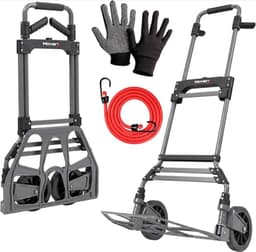
MoverX MoverX MX-T150 150 kg

Best value

MoverX MoverX MX-T150 150 kg
9.1/10about £34.99
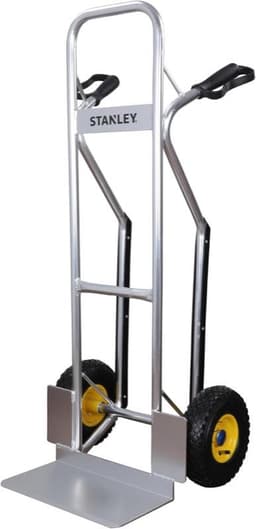
Stanley Stanley SXWT-HT525

Alternative

Stanley Stanley SXWT-HT525
8.5/10about £110.48
On this page

Check it before you load

Start with the mode you will use. On a convertible, upright sack-truck mode often has a lower limit than platform mode. Read the bullet, not only the larger number in the spec block. If the printed figure is 80 kg, a 90 kg fridge is already outside the seller’s rating even if the wheels still turn. What those stamps mean is set out in the sack truck 200kg buying guide. Look at the toe plate. Cracks, bends or a wavy edge mean stop. Supplier guidance says replace the truck or the plate, not hammer it flat. BIL and Handle-it both warn against straightening a distorted plate because the metal has already yielded. Check wheels and fasteners. Pneumatic tyres need equal pressure on both sides or the truck steers sideways. On folders, tighten nuts if reviews mentioned loosening, and confirm handle locks before you stack weight. That visual check does not replace an employer’s inspection under PUWER at work.

Put the load on the plate

Roll the truck so the plate slides fully under the load’s centre of mass. For stacked cartons, put the heaviest box low against the frame so the stack does not topple when you tilt. Supplier how-to pages describe loading against the back frame, not hanging off the front edge of the plate. Handle-it’s documents disagree on how much of the load should sit over the plate: one source says two thirds of the length, another one third. HSE is quoted as not setting a single fraction. If more than a small part hangs past the plate, strap it. Several listings leave plate size blank. If a promised bungee is missing from the box, buy a strap before the first landing.

Tilt and move

Stand on the handle side, foot on the axle plate if your model allows it, and pull the handles toward you until the load balances on the two wheels, or on four wheels in platform mode. Trucks and Trolleys’ UK note is simple: tip back, then push rather than pull on flat ground. Pulling fights the toe plate and steers poorly. Walk at a controlled pace. On a slope, Handle-it’s procedure for staff says: going downhill, keep the truck in front of you so it cannot run away. Going uphill, you may be ahead pulling it. That is a workplace procedure, not a statute, but a loaded truck running away is how toes get hurt. On a kerb, if the listing never answered whether it can be used on stairs, assume no special hardware. Some UK reviews of folders mention stopping on a paving lip. Reduce the load. Do not bounce the plate. If the truck pulls sideways, recheck both tyres.

When you should stop

Stop when the load exceeds the mode capacity on the listing, when the plate or handle is damaged, or when you cannot see the route. Stop when a slope feels faster than a walk. Get help or split the load. Do not take a normal two-wheel truck up a full flight of stairs unless the listing names stair skids, guides, or tri-star climber hardware built for that job. Handle-it tells staff to avoid stairs and kerbs unless the truck has stair skids. Only Stanley in this set claims built-in stair guides, and that is still not a 200 kg stair rating. Read sack truck for stairs before you try a flight with a fridge. Stop when you are alone with a load that could crush a foot if it slips. If the toe plate bent during the move, retire or replace the truck.

Common questions

Do I push or pull?
On flat ground, push with the load tilted back. Pulling is for short repositioning, or for some uphill steps in supplier procedures, not for a long hallway.
Where should the heavy box sit?
Low against the frame, centred on the plate. Top-heavy stacks belong strapped or split before you tilt.
How far do I tilt?
Only until the load balances on the wheels and you can steer without the front edge digging in. More tilt does not mean safer.
What if the toe plate is already bent?
Do not straighten it. Replace the plate or stop using the truck. The metal has already yielded.
Which way do I face on a slope?
Downhill, supplier procedures put the truck in front of you so it cannot run away. Uphill, you often pull while ahead of the wheels. Walk the slope empty first if you are unsure.
Can I leave it loaded in a hallway?
Only if the brake or wheel chock is safe and the strap holds. A truck left loaded overnight stresses tyres and the plate. Unload when you can.
When do I stop and get help?
When weight, visibility, slope or stair geometry exceeds one controlled person, or when the hardware is damaged, or when the listing never rated the mode you are using.

Related pages

Sources

Public UK sources named below. amazon.co.uk prices, stars and review counts on these ten listings were read for the 20 October 2026 scoring. Page updated October 2026.

  1. HSE INDG478 RAPP tool (retrieved 20 October 2026)
  2. HSE L23 Manual handling (retrieved 20 October 2026)
  3. Manual Handling Operations Regulations 1992 (retrieved 20 October 2026)
  4. HSE: lifting equipment and LOLER (retrieved 20 October 2026)
  5. PUWER 1998 (retrieved 20 October 2026)
  6. Manutan UK sack truck buyers’ guide (retrieved 20 October 2026)
  7. BIL Group: sack trucks and trolleys (retrieved 20 October 2026)
  8. Consumer Rights Act 2015, section 9 (retrieved 20 October 2026)