Independent comparisons. We may earn from shop links. More info

How to use a leaf blower vacuum

Updated: October 2026

If a new garden vac is sitting beside a patio full of leaves, the safest sequence is to prepare the cable and work area, blow the leaves into a manageable pile, then collect them in vacuum mode. Learning how to use a leaf blower vacuum is less about finding one universal switch position and more about following the manual for your model. Corded machines must be unplugged, and cordless machines must have the battery removed, before you change parts or clear a blockage. Our [electric leaf vacuum comparison](/hub/lawn-and-garden-equipment/electric-leaf-vacuum) shows which models include straps, wheels and batteries. This guide covers the shared technique.

If a new garden vac is sitting beside a patio full of leaves, the safest sequence is to prepare the cable and work area, blow the leaves into a manageable pile, then collect them in vacuum mode.

Our top picks

WORX WORX WG583E

Best overall

WORX WORX WG583E
8.2/10about £199.99
Straame Straame 3000 W

Best value

Straame Straame 3000 W
8.6/10about £34.99
On this page

Before the first pass

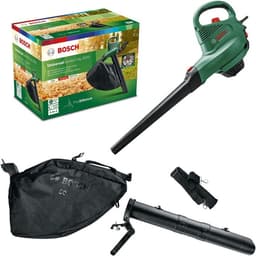
Read the manual, because conversion differs. Some machines use separate tubes, some a selector, Greenworks describes unclipping tubes, and WORX claims tool-less conversion. Fit the bag, close the zip, attach any strap and confirm the intake guards are locked. Never bypass an interlock. Clear people, pets, stones, sticks and wire. The impeller is for leaves, not gravel. Wear sturdy footwear and eye protection, and consider hearing protection: printed cells here reach 90, 99 and 106 dB. For mains, Electrical Safety First advises a 30 mA RCD and one outdoor lead, fully uncoiled. Do not daisy-chain, and do not run the tool in rain or on dew. Route the cable behind you. If an empty bag already feels unbalanced, fix the strap or wheels before leaves add weight.

Blow, then collect

Blow scattered leaves into a narrow row with controlled sweeps. Lower speed can hold dry leaves on paving. Switch off before changing function. If parts must move, unplug or remove the battery, and wait for the impeller to stop. In vacuum mode, hold the inlet close and feed the edge of the pile. The VonHaus 2500105 manual, which matches one model number here, says keep the chute close to the ground. A dense bundle of large leaves blocks the tube even when dry. Falling suction means stop. Damp material has its own limits on the leaf vacuum for wet leaves page.
WORX WORX WG583E

Testsieger

WORX WORX WG583E
8.2/10about £199.99

Emptying the bag and clearing blockages

Empty the bag before it drags. Switch off, wait, then unplug or remove the battery. Open the zip over a garden-waste container or leaf-mould pile, and do not pull against the seams. The VonHaus manual says wet leaves can block the outlet and tells you to unplug before you clear the bag. Do not put a hand in the chute while power is connected. One garden-vac instruction set allows a non-metallic stick for an accessible jam. Your manual takes priority, and you never reach towards the impeller. If the jam needs a guard or the motor housing removed, stop and use a competent repairer. Stop too for a cracked housing, a cut lead, a burning smell, unusual vibration, or an RCD that trips again. Tape is not a repair for an outdoor mains lead. After use, let a damp bag dry, and store the cable loosely.

What changes with a cordless machine

A cordless blow-vac removes the lead, not the isolation rule. Take the pack off before you change tubes or clear a jam. Releasing the trigger is not enough while a charged battery is fitted. The Greenworks GD40BV is tool only. The WORX WG583E includes two 2.0 Ah packs and a dual-port charger. Charge with the approved charger, and do not use a swollen pack. High-power suction through a dense pile uses more energy than light blowing, so work in sections and keep a second pack ready where the platform allows. Whether mains runtime or battery mobility suits the garden is the corded versus cordless leaf vacuum question. The operating rule is the same: stop, isolate and inspect when airflow changes.

Common questions

Should I blow or vacuum first?
Blow first when leaves are scattered, using controlled sweeps to create small piles. Then switch off and follow your manual's procedure for vacuum mode. Feeding the edge of a pile is usually more manageable than trying to vacuum a wide lawn randomly, and it reduces repeated walking with a filling bag.
How close should the vacuum nozzle be?
Keep it close enough to lift leaves without pressing it into the ground or sealing the opening. The VonHaus 2500105 manual advises holding the chute close to the ground. If dry leaves blow away, lower the speed where available and approach the pile edge steadily.
When should I empty the collection bag?
Empty it before it becomes heavy, drags or causes suction to fall. Switch off, wait for the impeller to stop, then unplug or remove the battery before detaching the bag. A nominal 45- or 50-litre capacity does not mean you must pack it completely full.
What should I do if the tube blocks?
Release the trigger, wait for moving parts to stop and isolate the power. Follow the model manual for access, keeping hands away from the impeller and never clearing the chute while connected. If the blockage requires removal of a fixed guard or motor housing, use a competent repair service.
Can I use a metal tool to clear a jam?
Do not improvise with a metal object. It can damage the impeller and may introduce an electrical or sharp-edge hazard. One generic garden-vac instruction set specifies a stick rather than metal, but only use an accessible method expressly allowed by your own manual after isolating the machine.
When should I stop rather than troubleshoot?
Stop for a damaged cable or plug, cracked housing, burning smell, severe vibration, battery damage, or an RCD that will not remain set. These faults go beyond routine bag or tube clearing. Contact the manufacturer, seller or a competent repairer, and use an electrician for a suspect outdoor supply.

Related pages

Sources

Sources from the research digest, last checked on 22 October 2026. Shelf prices and star lines are from the amazon.co.uk listings in that digest.

  1. Schedule 2, Noise Emission in the Environment by Equipment for use Outdoors Regulations 2001 (retrieved 22 October 2026)
  2. GOV.UK, noise from outdoor equipment: marking-only list (retrieved 22 October 2026)
  3. SI 2025/1073, measurement of electric leaf blowers (retrieved 22 October 2026)
  4. GOV.UK, statutory nuisances: how councils deal with complaints (retrieved 22 October 2026)
  5. Electrical Safety First, garden (retrieved 22 October 2026)
  6. IET Wiring Matters, 30 mA RCD for socket outlets (retrieved 22 October 2026)
  7. RHS, leaf mould (retrieved 22 October 2026)
  8. HSE, noise advice (retrieved 22 October 2026)