Bay tree pot or ground
You have a young culinary bay and a spare patch of border, and the pot it arrived in already feels temporary. Bay tree pot or ground is one decision: drainage and wet soil first, hardiness second. Use a container when the soil stays wet or you may need to move the plant. Use the ground when drainage and shelter are already good, because that plant is the hardier one. The [bay laurel plant comparison](/hub/herb-seeds/bay-laurel-plant) ranks six Carbeth starters and does not pick a site. A qualifying purchase can earn a commission at no extra cost to you.
You have a young culinary bay and a spare patch of border, and the pot it arrived in already feels temporary. Bay tree pot or ground is one decision: drainage and wet soil first, hardiness second.
You have a young culinary bay and a spare patch of border, and the pot it arrived in already feels temporary. Bay tree pot or ground is one decision: drainage and wet soil first, hardiness second. Use a container when the soil stays wet or you may need to move the plant. Use the ground when drainage and shelter are already good, because that plant is the hardier one. The bay laurel plant comparison ranks six Carbeth starters and does not pick a site. A qualifying purchase can earn a commission at no extra cost to you.
Our top picks
| Badge | Product | Listed site | Pot size | Plants | Note | Price | Offer |
|---|---|---|---|---|---|---|---|
| Best overall |  Carbeth Plants Carbeth Plants Laurus Nobilis Bay Tree in 13cm Pot | Indoor, outdoor | 13 cm | 1 | 8.6 | about £15.99 | View offer |
 Carbeth Plants Carbeth Plants 2 x Laurus Nobilis Bay Tree in 10cm Pot | Indoors or outdoors, sheltered | 10 cm | 2 | 8.7 | about £16.99 | View offer | |
| Best value |  Carbeth Plants Carbeth Plants Bay Laurel Plant Herb for Cooking in A 9cm Pot | Outdoor | 9 cm | 1 | 8.2 | about £11.99 | View offer |


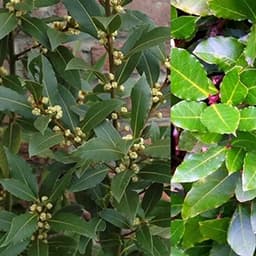
Best value
Carbeth Plants Carbeth Plants Bay Laurel Plant Herb for Cooking in A 9cm PotOn this page
Start with the soil, not the pot
A pot is the movable plant, and the colder one
The border is a long plant
The choice, with the winter page left closed
Common questions
Should a new bay go in the border or stay in a pot?
What if my soil is heavy clay and stays wet in winter?
Is a pot always safer in the UK?
Will the same plant cope with more frost in the ground?
How big can it get if I never clip it?
Related pages
Sources
Public UK sources named below. amazon.co.uk prices, stars and review counts on these six listings are the figures kept for this comparison. A search on 19 October 2026 showed no featured offer on B07B6NWPXL. Page updated 21 October 2026.
- RHS, How to grow bay (retrieved 19 October 2026)
- RHS, Bay tree care (retrieved 19 October 2026)
- RHS, Laurus nobilis (retrieved 19 October 2026)
- RHS, Bay sucker (retrieved 19 October 2026)
- GOV.UK plant passports (retrieved 19 October 2026)
- Consumer Rights Act 2015, section 9 (retrieved 19 October 2026)
- GOV.UK returns and refunds (retrieved 19 October 2026)
- Demasi and others, Toxins (2022), cherry laurel (retrieved 19 October 2026)