Independent comparisons. We may earn from shop links. More info

Radiator spray paint yellowing and finish

Updated: 22 October 2026

Your panel looked fine until you repainted the walls brilliant white. Now the radiator reads butter-yellow, or you sprayed a white satin and the fins dried looking like clotted cream on day one. Radiator spray paint yellowing and a wrong shade out of the can are different problems, and they need different fixes. This page separates them, records what the six aerosols claim about staying white, and walks satin, gloss, magnolia, and chrome. The rows are on the [radiator spray paint comparison](/hub/heating/radiator-spray-paint). Peter F. checked the October 2026 listings and public UK sources. There was no heat-ageing lab test. A qualifying purchase can earn a commission at no extra cost to you.

Your panel looked fine until you repainted the walls brilliant white. Now the radiator reads butter-yellow, or you sprayed a white satin and the fins dried looking like clotted cream on day one.

Our top picks

On this page

Two different yellow problems

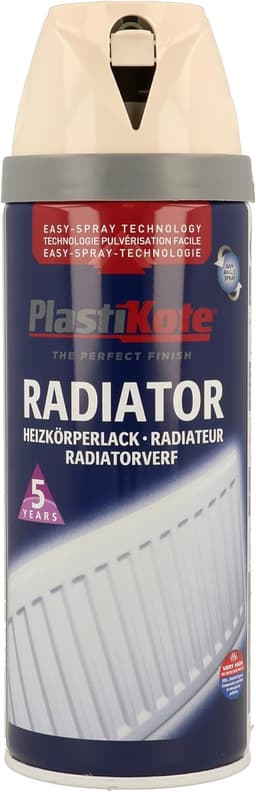
Long-term yellowing on hot radiators often comes from old solvent-based coatings cycling warm, especially where curtains trap heat and block daylight. Oil-based films discolour faster on hot metal than water-based brush lines sold as stay-white. That history decides overcoat or strip. It is not the same as opening a fresh aerosol and seeing a magnolia undertone on day one. UK reviews of Twist & Spray repeatedly describe cream, magnolia, or clotted-cream results, while the finish field is semi-gloss. Hammerite reviewers more often say a discoloured radiator looks cleaner after two coats. That is an anecdote, not a guarantee against later heat tint. Magnolia gloss is intentionally magnolia. Blaming it for missing white walls is a colour choice, not a product failure.

What these six sprays say about staying white

On the October 2026 listings, anti-yellowing is claimed for Hammerite, Rust-Oleum, Twist & Spray, magnolia gloss, and satin chrome. Trade gloss white has no anti-yellowing figure in the bullets. Hammerite's wording is that it resists yellowing and rust, with brilliant white bullets. PlastiKote white and magnolia cite a non-yellowing formula and heat resistance up to about 100 °C. Chrome pairs non-yellowing with a 300 °C bullet. Those are manufacturer claims, not a heat-cycle result. Ronseal stay-white and Johnstone's water-based radiator lines sit outside this aerosol set. If you want the brightest white here, Hammerite's brilliant white line and the deeper review sample are the first row to open. The claim still needs ventilation and several light coats.
Hammerite Hammerite Satin 400 ml

Testsieger

Hammerite Hammerite Satin 400 ml
8.1/10about £9.23

Satin, gloss, magnolia, and chrome

Satin and semi-gloss hide minor texture and match most factory-look panels. Gloss, on Rust-Oleum white, magnolia, and trade gloss, shows runs, dust, and scratches. It depends on the light passes in how to spray paint a radiator. Magnolia gloss belongs where the woodwork is already magnolia, not where you are chasing wall white. Satin chrome has one amazon.co.uk review on the October 2026 listing and a 300 °C bullet. It suits a statement radiator, not a yellowed bedroom panel, and preparation flaws show. Brilliant white emulsion can make a warm enamel look yellow by contrast, so match a paint chip or accept an off-white.

What still yellows or mismatches

Dark or yellow enamel without enough hide leaves warmth showing through. Budget cans on coverage and how many cans. Heat before full cure softens the film and holds odour. That is a process mistake, separate from tint years later. Follow the cure time on your tin. Oil-filled electric heaters may need explicit approval. A Rustins brush sheet excludes oil-filled radiators. Do not assume every aerosol inherits that sentence. Test a hidden corner before you commit the face. If the shade is wrong immediately, switch row rather than adding coats of the same tin. Finish names and heat wording are on the buying guide.

Common questions

Why do radiators go yellow behind curtains?
Heat and a lack of daylight age many older coatings faster, especially oil-based films on metal that cycles warm. Curtains trap that heat. A fresh aerosol does not rewind decades of tint unless you have enough hide on a sound, keyed surface. The yellow you see first is the old coating.
Will a non-yellowing aerosol stop that?
The bullets claim resistance. They are not a lab certificate, and these cans were not heat-cycled here. Hammerite, Rust-Oleum, Twist & Spray, magnolia gloss, and satin chrome carry that line on the October 2026 listings. Trade gloss does not. Hide, preparation, and sheen still decide whether old yellow shows through.
Satin or gloss if I want marks to show less?
Satin or semi-gloss usually hides minor texture better than gloss, and it is closer to the factory look on many UK panels. Gloss looks crisp and shows runs, dust, and scratches. Choose gloss when the radiator is already gloss and the coats stay light.
Why does a new white spray look cream immediately?
Often it is the colour in the can, not heat yellowing. Several UK reviews of Twist & Spray describe cream, magnolia, or clotted cream, and the finish field is semi-gloss. Hammerite reviews more often describe a cleaner white on a panel that was already discoloured. Another coat of the same cream tin will not make brilliant white.
Is magnolia the same as a yellowed white?
No. Magnolia is the named colour on PlastiKote magnolia gloss. Yellowed white is an aged coating, often an older film behind a curtain. Buying magnolia will not match brilliant white walls. Buy it only when the woodwork or the walls are already magnolia.
Does chrome spray hide old yellow better than white?
Unlikely. Satin chrome is a different look, with one review on the October 2026 listing and a 300 °C bullet. It shows preparation flaws. It is not a concealment white. To make an old white radiator look white, stay with satin or gloss white and use enough coats to hide the old colour.

Related pages

Sources

Public UK sources named below. amazon.co.uk prices, stars and review counts on these six listings were taken from the listing files read for October 2026. Page updated October 2026.

  1. Crown Paints — How to paint a radiator (retrieved 21 October 2026)
  2. DIY Doctor — How to paint a radiator (retrieved 21 October 2026)
  3. GOV.UK — Aerosol Dispensers Regulations 2009 (retrieved 21 October 2026)
  4. HSE — SMART paint spraying INDG473 (retrieved 21 October 2026)
  5. Homebuilding — Best radiator paint (retrieved 21 October 2026)
  6. Expert Reviews — Best paint for radiators (retrieved 21 October 2026)