Independent comparisons. We may earn from shop links. More info

Radiator paint yellowing: dirt, heat and stay white

Updated: October 2026

You repainted the room in a clean brilliant white and the radiators now look butter-yellow beside the fresh walls, so you search for stay-white tins hoping marketing will outrun the problem. Yellowing is usually aged coating, baked-on dirt, or stain bleed—not something a label alone fixes. This page explains why UK radiators discolour, what anti-yellow products actually claim, and how prep must change before you order from the [radiator paint comparison](/hub/heating/radiator-paint). Prices and review counts are the October 2026 amazon.co.uk capture. A qualifying purchase can earn a commission at no extra cost to you.

You repainted the room in a clean brilliant white and the radiators now look butter-yellow beside the fresh walls, so you search for stay-white tins hoping marketing will outrun the problem.

Our top picks

On this page

Why radiators discolour

Heat cycles age alkyd whites toward cream even when the boiler output is normal for a wet system—decorative enamels are not immune to time and temperature. Dust and nicotine films sinter onto the surface over years; a wet cloth sometimes reveals a whiter patch underneath, which tells you the top layer was grime as much as pigment failure. Rust staining from pinholes or valve weeps throws orange-brown through pale paint if corrosion was never stabilised. Gloss old enamel can yellow differently from matt wall paint beside it, which is why the mismatch jumps out after you only repaint plaster. Steam systems and unusually hot surfaces accelerate the change; if you are on steam or commercial plant, a generic radiator tin may be the wrong product regardless of colour marketing.

Stay White and similar claims

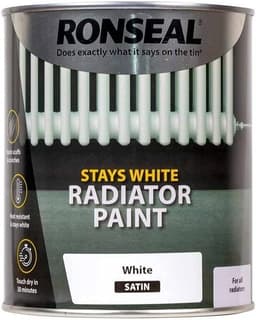
Ronseal Stay White matt and gloss listings in the matrix (250 ml and 750 ml matt, 750 ml gloss) explicitly market resistance to heat yellowing compared with ordinary paints. That is a formulation positioning, not a guarantee over greasy or translucent old film. amazon.co.uk reviews split: many owners see bright panels after two thin water-based coats and praise low odour; others say the paint is too thin, drippy, or still cream after insufficient prep. Rustins quick-dry satin appears frequently in yellow-to-white success stories without stay-white branding—the review volume there is far larger, which helps you judge variance. Anti-yellow marketing helps narrow the tins, but degrease, keying, and coat count still dominate the outcome.
Hammerite Hammerite satin 400 ml

Testsieger

Hammerite Hammerite satin 400 ml
8.4/10about £9.23

Prep before repainting white

Wash with sugar soap or degreasing detergent, rinse, and dry—yellow often lifts partly with cleaning alone, which tells you how much was surface film. Lightly abrade glossy enamel so the next coat bonds; if the old yellow is soft or crazed, feather the edges and remove loose flakes. Bare rust needs primer; staining from rust bleed needs stabilising treatment, not another white topcoat alone. Painting over yellow without keying traps the old colour visually even when the new tin says stay-white. Two or three thin coats beat one heavy coat that runs on vertical fins—Ronseal matt reviews make this point repeatedly. Match sheen to the room: matt stay-white for contemporary flats that reject gloss; satin if you want easier wiping on hallway radiators. Allow a full cure before you crank the heat—a soft film yellows faster and picks up dust. The coat sequence is on how to paint a radiator. If nicotine or cooking grease was the root cause, paint cannot stop future deposition. When walls and radiators must match, buy enamel marketed for radiators, not leftover wall emulsion.

Finish after a refresh

Matt stay-white suits flat panels in bedrooms and living rooms where gloss feels dated; watch thin-body runs if you brush heavily. Satin (Rustins, or a Johnstone's satin tin) balances wipeability and mark hiding on busy corridors. Gloss (Johnstone's gloss, Ronseal Stay White gloss) matches period radiators and reflects more light—and shows dust sooner. Spray can give an even white on finned sections but adds masking and fume control. A yellowing job on a column radiator sometimes pairs a brush tin for the front face and aerosol for the fins if sheen is matched on a test area. Format trade-offs are on radiator spray paint vs brush.

When to strip or call a plumber

Strip or mechanically remove a failing coating if it lifts in sheets, bubbles after prior repaints, or hides active rust—overcoating unstable layers invites a quick return of yellow and peel. Call a plumber for weeping valves, cold spots that suggest sludge, or rust-through; paint hides neither leaks nor balancing issues. Steam heating, or an unknown maximum surface temperature, needs a proper specification, not a guess from a product title. If repeated stay-white attempts fail on one radiator while the neighbours hold white, suspect that unit's corrosion or heat imbalance, not only the tin brand.

Common questions

Why do white radiators go yellow?
Heat ageing of old enamel, baked dirt and nicotine, rust bleed, and sometimes a mismatch with newly whiter walls. It is not necessarily a bad batch of paint.
Does stay white paint work?
It can, on a degreased, keyed surface, with several thin coats. The marketing line does not override a greasy or glossy yellowed base.
Can I paint over yellow paint?
Only if you degrease, key the sheen, and accept two or three thin coats. Unstable or soft old paint should come off first.
Will gloss yellow faster than matt?
Both can discolour over years. Gloss shows yellow against new matt walls more obviously because it reflects light, not always because it ages quicker.
Is it heat or nicotine staining?
Nicotine and cooking films yellow more evenly and often clean partly. Heat-aged enamel yellows on the radiator while nearby wall paint stays brighter if the walls were renewed.
Do I need to strip old paint?
Strip or abrade layers that are failing. Stable enamel that you have keyed can stay, with a proper degrease and thin coats.
How long until yellow returns?
Years if prep and cure were correct and the heating system is a normal wet system. Months if grease, rust, or emulsion on metal is repeated.
Is yellowing a paint fault?
Manufacturing issues sometimes occur, but most yellowing traces to age, dirt, bleed-through, or painting warm or greasy metal. Check the prep before you blame the tin alone.

Related pages

Sources

Public UK sources named below. amazon.co.uk prices, stars and review counts on these nine listings were taken from the listing files read in October 2026. Page updated October 2026.

  1. Crown Paints — How to paint a radiator (retrieved 21 October 2026)
  2. DIY Doctor — How to paint a radiator (retrieved 21 October 2026)
  3. Farrow & Ball — Metal primer advice sheet (retrieved 21 October 2026)
  4. Homebuilding — Best radiator paint (retrieved 21 October 2026)
  5. Essentials Fix — Hammerite vs Rustins vs Ronseal (retrieved 21 October 2026)
  6. GOV.UK — Designated standards notice (EN 442) (retrieved 21 October 2026)
  7. amazon.co.uk listings for the compared ASINs (retrieved 21 October 2026)