Independent comparisons. We may earn from shop links. More info

Baby ear defenders for plane travel

Updated: 21 October 2026

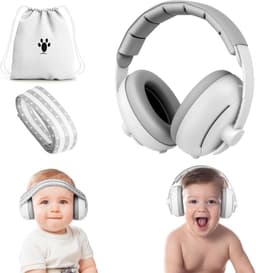
You are packing a cabin bag for a UK departure, and someone has said the baby needs ear defenders for take-off and landing. Baby ear defenders for plane travel can lower cabin noise for a supervised stretch. They leave ear pressure on descent as a separate problem, and a feed or a dummy is the usual response to that pressure. Shelf prices sit on the [ear defenders baby comparison](/hub/hearing-protection/ear-defenders-baby). The strap sequence and which listing states an SNR are on the guides linked below. This page keeps the two jobs apart so you pack the right fix.

You are packing a cabin bag for a UK departure, and someone has said the baby needs ear defenders for take-off and landing. Baby ear defenders for plane travel can lower cabin noise for a supervised stretch.

Our top picks

On this page

Pressure and noise are not the same

Ear pain or crying on the way down is often pressure in the middle ear as cabin altitude changes. Swallowing helps that pressure equalise. BabyTravel UK tells parents to offer a feed or a dummy as take-off and landing begin, and to leave a baby who is already asleep rather than waking them only to feed. The headband does not open the Eustachian tube. SnoozeShade’s UK flight guide draws the same line: muffs can lower cabin noise, and they do not equalise pressure. If your only worry is the cry on descent, pack the feed first. Add muffs if the engines are the part you want lower. A cold, an ear infection or recent ear surgery is the point where you ask a GP or a pharmacist before you fly.

When muffs help on a flight

Muffs help when the cabin is loud and both ears stay inside the pads, for a period you can supervise. Put the cups on before the loud part if the baby accepts them, and make them easy to remove for a feed. Alpine’s brand page says about 90 minutes at a time and about 3 hours a day. A long-haul nap needs a break and a look at the skin. NHS guidance is against all-day hearing protection, so the muffs come off in a quiet gate. The strap order is on how to fit baby ear defenders.

What parents in this set reported

Flight comments in this folder are mixed, and they do not crown a winner. A pink Alpine review said the cups feel bulky when you are holding a sleeping baby and do not cancel much noise. Sand reviews praised flights at 4 and 5 months and also said the band was large or not yet fitting at 4 months. Green includes a 3-month-old who only just fitted the tightest hole. Aolso has a 10-week-old who slept, with the reviewer wanting the band smaller. Iwinna’s flight line is the modest one: better than nothing, after you stretch the band. Read the comments as muffled, if the cups stay seated.

What to pack, and when to ask a GP

Pack a feed or a dummy for descent, the muffs if cabin noise is your reason, and a way to store the cups once you take them off. Practise the seal at home so the first fastening is not on the runway. Take them off in the quiet part of the airport. Routine wear for the rest of the holiday is the habit the NHS page argues against. If the head only fits the last hole, leave the muffs out of the cabin bag. A qualifying purchase on amazon.co.uk can earn us a commission at no extra cost to you. The comparison used BabyTravel UK, SnoozeShade, the NHS page and these flight lines, without measuring a cabin.

Common questions

Do babies need ear defenders to fly?
Babies do not need muffs to fly. They need a way to swallow during the pressure change, which is usually a feed or a dummy, including the option to leave a settled sleeper alone. Muffs are optional for cabin noise when your baby will keep them on and you can watch the fit. Many families fly with neither a published SNR nor a headband and do fine. Add muffs for the engine noise if you want that extra, and skip them if the only goal is the landing cry.
Will they stop ear pain on landing?
They will not equalise ear pressure. BabyTravel UK and SnoozeShade both separate that job from noise reduction: offer a feed or a dummy as descent starts, and treat muffs as a cabin-noise option. The headband does not open the Eustachian tube. If a round-up implies that baby muffs ease landing pain, that claim conflicts with those explainers. Use the feed for the pressure and the cups, if at all, for the noise.
When should I put them on?
Put them on before the loud stretch if the baby accepts the band, and keep the release easy enough for a feed in the seat. Take them off for the feed if the cups get in the way of a latch, then refit only if the cabin is still the problem. Remove them once you are in a quiet gate. Alpine’s about-90-minutes guidance is that brand’s instruction, so a long-haul sleep needs a break and a look at the skin rather than one continuous wear.
What if my baby has a cold?
Ask a GP or a pharmacist before the flight if there is a cold, an ear infection, or recent ear surgery. Congestion is what makes pressure changes harder, and a muff does not clear it. This page does not recommend a medicine or a dose. The practical packing list stays a feed or a dummy, plus muffs only for noise if you still travel. If you are advised to postpone the trip, the ear defenders are irrelevant until the next ticket.
Are they safe for a whole long-haul sleep?
A whole flight in one wear overruns Alpine’s about-90-minutes-at-a-time instruction, and other brands here do not publish a longer allowance you can lean on. Supervise any nap, check that the mouth and nose stay clear, and take a break to look at the skin. Remove the muffs when you reach a quiet building. All-day and all-night use at home is the pattern the NHS hyperacusis page tells families to avoid, including after you land.

Related pages

Sources

Public UK sources named below. amazon.co.uk prices, stars and review counts are from the twelve listings in this comparison. Page updated 21 October 2026.

  1. Control of Noise at Work Regulations 2005, regulation 4 (retrieved 21 October 2026)
  2. HSE employers' noise duties (retrieved 21 October 2026)
  3. Pyrotechnic Articles (Safety) Regulations 2015 (retrieved 21 October 2026)
  4. NHS hyperacusis (retrieved 21 October 2026)
  5. Gloucestershire Hospitals sound sensitivity leaflet (retrieved 21 October 2026)
  6. Alpine Muffy Baby UK (retrieved 21 October 2026)
  7. Alpine Muffy Baby fit steps (retrieved 21 October 2026)
  8. RoSPA firework safety (retrieved 21 October 2026)