How to hole a slate from the bed, on a bench
You have a slate on the bench, a pick, and a nail that needs a hole, and you would rather not crack the slate on the first blow. This is how to hole a slate from the bed: where the two holes sit, what to rest the slate on, and when a supplier says the spike is the wrong tool. The [slate hammer comparison](/hub/hand-tools/slate-hammer) is the hammer table. This page is the strike, and it does not send you up a ladder. Peter F. took the positions from CUPA and SSQ, not from a test struck here. A qualifying purchase can earn a commission at no extra cost to you.
You have a slate on the bench, a pick, and a nail that needs a hole, and you would rather not crack the slate on the first blow.
You have a slate on the bench, a pick, and a nail that needs a hole, and you would rather not crack the slate on the first blow. This is how to hole a slate from the bed: where the two holes sit, what to rest the slate on, and when a supplier says the spike is the wrong tool. The slate hammer comparison is the hammer table. This page is the strike, and it does not send you up a ladder. Peter F. took the positions from CUPA and SSQ, not from a test struck here. A qualifying purchase can earn a commission at no extra cost to you.
Our top picks
| Badge | Product | Pick | Nail claw | Pattern | Note | Price | Offer |
|---|---|---|---|---|---|---|---|
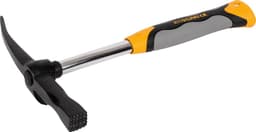
| Best overall |  Estwing Estwing E239MS roofer's pick | Spike on a one-piece head | Nail groove | Roofer's pick | 8.5 | about £62.02 | View offer |
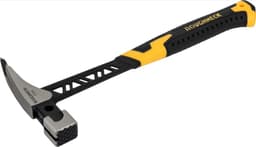
| Best value |  Roughneck Roughneck ROU61800 slater's hammer | Pointed tip | Central claw | Site hammer | 8.7 | about £16.99 | View offer |
| Alternative |  Roughneck Roughneck Gorilla ROU11040 slater's hammer | Pick end | Nail puller | Site hammer | 8.3 | about £23.99 | View offer |

On this page
Where the hole has to be
Bed, support, one slate
When not to use the spike
Nails, then stop
Common questions
Do I hole the front or the back?
How many holes, and how far from the edge?
What do I rest the slate on?
What if the point will not go through?
Some suppliers say not to use a hammer. Who is right?
Can I do this on the roof?
Related pages
Sources
Prices, stars, and review counts are the amazon.co.uk saved listings for B0CBVW35XX, B004VRPXUU, B097BJ7444, B0002JT0BE, and B0001JZYL0, scored on 22 October 2026. Public sources cover work at height, PUWER, BS 5534, BS 8000-6, and holing practice. None of these listings is certified to those standards. This is not a lab strike test.
- HSE: Work at height FAQs (retrieved 22 October 2026)
- The Work at Height Regulations 2005 (retrieved 22 October 2026)
- HSE: PUWER and work equipment (retrieved 22 October 2026)
- NFRC: standards and regulations (retrieved 22 October 2026)
- LABC: fixing of roof tiles (retrieved 22 October 2026)
- CUPA: fixing guide for natural slate (retrieved 22 October 2026)
- SSQ: nail fixing guide (retrieved 22 October 2026)
- Kellaway: Roughneck slater's hammer (retrieved 22 October 2026)
- Metal Roofing Tools: Stubai slater's hammer 275501 (retrieved 22 October 2026)
- Wow Tools: Estwing E239MS roofer's pick (retrieved 22 October 2026)