Independent comparisons. We may earn from shop links. More info

Lighter fluid taste on a barbecue

Updated: 23 October 2026

The chicken came off the grill tasting of fuel, and the bottle in your hand said odourless. Lighter fluid taste on a barbecue is almost always unburned starter, not a mystery brand fault. You cooked while the coals were still burning off the liquid, or you added a second squirt to keep a weak fire alive. Grey ash is the checkpoint. A different bottle does not replace the wait. The listings are in the [firelighter liquid comparison](/hub/grill-accessories/firelighter-liquid). A qualifying purchase can earn a commission at no extra cost to you.

The chicken came off the grill tasting of fuel, and the bottle in your hand said odourless. Lighter fluid taste on a barbecue is almost always unburned starter, not a mystery brand fault.

Our top picks

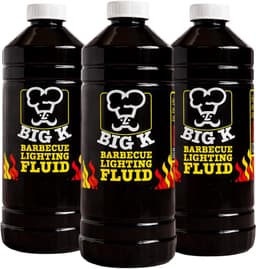
Big K Big K fluid (3 × 1 L)

Best overall

Big K Big K fluid (3 × 1 L)
9.2/10about £15.99
Big K Big K gel (1 L)

Alternative

Big K Big K gel (1 L)
8.6/10about £9.95
On this page

Why the food tastes of fuel

BBC Good Food warns that lighter fluid and firelighters can leave a petrol-like taste, and points cooks toward a chimney starter. Weber UK says lighter fluid can coat the grates and affect flavour, which is why that brand prefers lighter cubes and a chimney. The fluid has not finished burning when the food goes on, so the vapour seasons the meat. A second squirt makes it worse. You are adding fresh starter onto hot coals, which is the flash UK fire services tell you not to risk, and you are laying a new film of fuel under the food. GOV.UK says a recognised starter goes on cold coals only. If the first pour died after a short flame, the repair is a cold restart or better airflow, not another stream into the embers.

The grey-ash checkpoint

Which? describes grouping the coals, leaving the vents open, and waiting about 20 to 30 minutes until the charcoal is covered in white or grey ash. BBC Good Food’s chimney note uses a similar span. Treat that as a method note, not a time printed on a Big K, Homefiire, or ZIP label. The bed should look ashed over, with no yellow starter flames, and the solvent smell should have dropped away. If you still smell lighter fuel when you lean over the grate, it is not ready. One review on the three-litre fluid said the aftertaste was unacceptable unless the coals were left so long that the cooking time ran out. You do not close the lid over fresh fluid to bake the smell onto the chicken. The pour is on how to use BBQ lighting fluid.
Big K Big K fluid (3 × 1 L)

Testsieger

Big K Big K fluid (3 × 1 L)
9.2/10about £15.99

What the bottles in this set do not prove

The three-litre Big K fluid, 4.6 from 79 reviews, contains both kinds of comment: clean burning with food flavour kept, and a lingering lighter-fuel smell with an aftertaste. The two-litre fluid, also 4.6, includes a reviewer who could not taste it on the food. The 1 litre gel, 4.3 from 136, includes white smoke and a petrol-like smell. Homefiire’s title says odourless, and the sample is 19 reviews. None of those star lines is a flavour score. Odourless on the label is a low-odour claim, often a refined kerosene. It does not mean the vapour is gone the moment you see fire. Swapping to the 4.7-star litre, or to ZIP at about £15 for 500 ml, does not publish a taste result this file does not have. ZIP’s bullets do not claim the liquid is odourless. If you already squirted a lit fire, do not squirt again and do not put the food on to see. Let the bed burn until the smell has gone, or put the barbecue out with water or sand if fluid is still pooling. Soaked clothing, decking, or a sofa is a fire-service question, not a cooking tip.

When to change method

A chimney starter and solid firelighters are the route Weber and BBC Good Food describe when flavour is the complaint. You fill the chimney, light cubes or paper underneath, and wait until the coals are ashed, then tip them into the barbecue. London Fire Brigade’s April 2026 note prefers shop-bought firelighters over lighter fluid. Other UK fire services still allow a recommended lighting fluid on cold coals and forbid petrol. Instant-light briquettes already carry a starter. Adding bottled fluid on top stacks two fuels. This comparison did not test those bags. Stay with fluid or gel only if you will follow the cold-coal sequence and the grey-ash rule. The top pick in the main table is a three-litre fluid on stars and litre price, not on a taste trial.

Common questions

Why does the chicken taste of fuel?
The starter was still burning, or still smelling, when the meat went on. A second squirt onto hot coals adds more of the same. Wait until the bed is grey. Changing brand does not shorten that wait.
How do I know the coals are ready?
The charcoal should be covered in grey or white ash, without yellow starter flames, and the lighter-fuel smell should have faded. Which? and BBC Good Food talk about 20 to 30 minutes. That is not a time printed on these bottles.
Is 10 minutes enough?
Often no. Ten minutes can leave the starter still burning under a first glow, which is when reviewers describe aftertaste. Use the ash and the smell. Damp charcoal and a deep pile take longer than a shallow 5 cm bed.
Will a different brand remove the taste?
Not by itself. The 4.6-star fluid has both no taste and an aftertaste in the same review file. ZIP has five reviews and no review text, so it cannot be called the clean one. Cook on grey ash, or move to cubes and a chimney.
What if I already squirted a lit fire?
Do not add more. Let the coals burn until the smell has gone, or extinguish a pool of fluid with water or sand and abandon that cook. A flash, a burn, or fluid on clothing is 999. The next lighting starts from cold charcoal.
Should I switch to a chimney?
If flavour is why you are reading this, yes. Weber UK and BBC Good Food prefer lighter cubes or paper under a chimney, then cooking when the coals are ashed. You can keep a bottle for cold coals if you accept the wait.

Related pages

Sources

Public UK sources used for this comparison. Listing prices, stars and review counts are the amazon.co.uk figures for these ASINs. Retrieved 21 October 2026.

  1. GOV.UK: fire safety outdoors (retrieved 21 October 2026)
  2. London Fire Brigade: barbecue fires, April 2026 (retrieved 21 October 2026)
  3. HSE: do not use petrol to light fires (retrieved 21 October 2026)
  4. BSI: BS EN 1860-3:2023 scope (retrieved 21 October 2026)
  5. GOV.UK: kerosene general information (retrieved 21 October 2026)
  6. NHS: poisoning (retrieved 21 October 2026)
  7. Bartoline: barbecue lighting fluid data sheet (retrieved 21 October 2026)
  8. Weber UK: how to use a charcoal barbecue (retrieved 21 October 2026)