Independent comparisons. We may earn from shop links. More info

Briquettes vs lumpwood for a UK barbecue

Updated: 22 October 2026

You are standing in front of two fuels that both say charcoal, and the comparison you came from has no lumpwood row at all. Briquettes vs lumpwood is a shape decision: a pressed bed that holds, or irregular pieces that light faster and run hotter for a shorter time. It is not a ranking of Big K against another briquette brand. The [barbecue briquettes comparison](/hub/grill-accessories/barbecue-briquettes) stays on pressed bags. Peter F. used Weber’s help-centre tip, BBC Good Food’s charcoal review and a UK merchant’s account for the split, and did not burn a paired test. A qualifying purchase can earn a commission at no extra cost to you.

You are standing in front of two fuels that both say charcoal, and the comparison you came from has no lumpwood row at all.

Our top picks

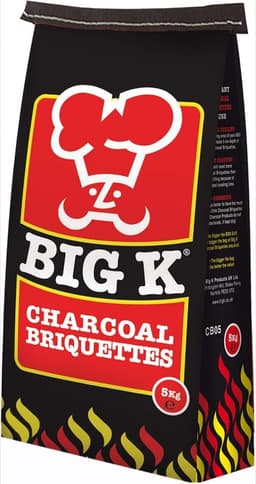
Big K Big K (4 × 5 kg)

Best overall

Big K Big K (4 × 5 kg)
8.7/10about £26.92
Big K Big K (5 kg)

Rank 2

Big K Big K (5 kg)
8.9/10about £9.30
Ecoblaze Ecoblaze (10 kg)

Rank 3

Ecoblaze Ecoblaze (10 kg)
6.9/10about £11.99
On this page

Two fuels, not two brands

Lumpwood is charcoal in the irregular pieces the wood became. A briquette is fines pressed into a pillow or a block, so the pieces stack and the bed is more repeatable. A UK merchant adds the additive warning: a pressed bag can carry a binder, and you should read that line. BBC Good Food’s charcoal review says the binder is often starch, and that briquettes are usually the cheaper, longer-burning option on the shelves they looked at. None of the seven bags on the briquette table is lumpwood. Instant-light briquettes are a separate class under BS EN 1860-2:2023, and none of those seven titles is sold that way. This page does not re-score the seven ASINs. Once you know you want the pressed shape, brand and weight live on best charcoal briquettes.

Heat, time and ash

Weber’s help centre states the split on Weber’s own fuels, and those times stay on Weber’s fuels. Their lumpwood is described as ready in about 15 minutes and good for about an hour and a half at 180°C. Their briquettes are described as ready in about 20 minutes and good for about three hours. Their tip is lumpwood when the cook is under about an hour, and briquettes when it runs longer. Do not paint those times onto Big K, Ecoblaze or Green Olive. Briquettes leave a tidier, often heavier ash bed. Lumpwood leaves irregular ash. A grey coat on briquettes is the ready cue, not a purity claim. Read the sack you are actually buying.
Big K Big K (4 × 5 kg)

Testsieger

Big K Big K (4 × 5 kg)
8.7/10about £26.92

When you pick which

Use lumpwood when you want a faster, hotter fire for a cook under about an hour. A couple of steaks, direct, is the usual case. You accept a less even bed and a quicker drop-off. Use briquettes when you want a longer, more even bed: sausages and chicken that need a steady hour, or anything you are holding with the vents. Weber’s under-an-hour tip is that rule on Weber’s numbers. Some cooks mix a little lumpwood with briquettes to speed the start. This comparison has no tested ratio.

Where you buy the one you chose

If you chose lumpwood, leave this briquette table. Lumpwood bags are compared in the charcoal category, at charcoal. If you chose briquettes, stay on the seven-bag table. Weight, the additive sentence and the review pattern are what the barbecue briquettes buying guide puts in order. Light either fuel outdoors, keep petrol off the coals, and wait until lighting smoke has thinned. For a garden kettle, use lumpwood under about an hour and briquettes for a longer even bed.

Common questions

Are briquettes better than lumpwood?
They are better for a longer, more even bed, which is the cook that runs past about an hour on Weber’s own tip. Lumpwood is the better fit for a faster, hotter fire under that sort of time, such as steak over direct heat. This page does not award a star gap.
Which fuel do you want for steak?
Lumpwood, when the plan is a hot direct cook measured in minutes rather than in a long hold. Weber’s lumpwood note, for Weber fuel, talks about ready in about 15 minutes and a shorter burn than their briquettes. For one rare steak and a quick rest, the irregular charcoal matches the job more closely.
Which fuel do you want for a long cook?
Briquettes are the usual choice when you need the bed to stay usable past the first hour. Weber’s tip puts their briquettes on the longer side of that line, at about three hours on their own product, which you should not copy onto another brand as a fact. Lumpwood can be refuelled, and some cooks prefer it in a kamado, with more topping up.
Do briquettes taste of chemicals?
A plain briquette can contain a binder, often starch where a brand prints it, as Weber does on its UK briquette page. Listings in this set range from free from chemicals and no chemical accelerants to bags that say nothing. Thick smoke at lighting will flavour the food whichever shape you bought. If a bag smells of solvent in the sack, do not cook on it.
Do you need more lumpwood than briquettes for the same cook?
BBC Good Food’s rule of thumb is about 1.5 kg of lumpwood for the output of 1 kg of briquettes. Use it as their rule of thumb, not as a weighed result for Big K or for any lumpwood ASIN. For a short steak cook you may use less lumpwood than a full briquette chimney, because you are not building a three-hour bed.
Can you mix briquettes and lumpwood?
Cooks do mix them, usually a little lumpwood to help the start and briquettes to hold the later hour. This comparison has no tested ratio. If you mix, light outdoors, skip petrol, and judge readiness by the briquette ash coat.

Related pages

Sources

Public UK sources for the rules and the lighting guidance, last checked on 21 October 2026. Product prices, stars and review counts come from the amazon.co.uk files for these ASINs.

  1. GOV.UK: Smoke control area rules (retrieved 21.10.2026)
  2. GOV.UK: Smoke control area enforcement by local authorities in England (retrieved 21.10.2026)
  3. The Air Quality (Domestic Solid Fuels Standards) (England) Regulations 2020 (SI 2020/1095) (retrieved 21.10.2026)
  4. GOV.UK: Selling manufactured solid fuels for domestic use in England (retrieved 21.10.2026)
  5. Defra: Big K restaurant grade charcoal briquettes, fuel ID 0123 (retrieved 21.10.2026)
  6. BSI Knowledge: BS EN 1860-2:2023 barbecue charcoal and briquettes (retrieved 21.10.2026)
  7. Weber UK: Lighting your barbecue (retrieved 21.10.2026)
  8. RoSPA: Barbecue safety (retrieved 21.10.2026)