How to set up a hose timer on a UK outdoor tap
You have the box open, alkaline cells on the kitchen table, and one evening left before the first unattended run. How to set up a hose timer, UK-style, is mostly washer, thread, clock, and a supervised full cycle. This page stays procedural. Ranking lives on the [water timer comparison](/hub/garden-watering/water-timer). The rows below are amazon.co.uk lines, not a lab test, and they only show the batteries, inlet, and pressure you will meet on the first evening. A qualifying purchase through our links can earn a commission at no extra cost to you.
You have the box open, alkaline cells on the kitchen table, and one evening left before the first unattended run. How to set up a hose timer, UK-style, is mostly washer, thread, clock, and a supervised full cycle.
You have the box open, alkaline cells on the kitchen table, and one evening left before the first unattended run. How to set up a hose timer, UK-style, is mostly washer, thread, clock, and a supervised full cycle. This page stays procedural. Ranking lives on the water timer comparison. The rows below are amazon.co.uk lines, not a lab test, and they only show the batteries, inlet, and pressure you will meet on the first evening. A qualifying purchase through our links can earn a commission at no extra cost to you.
Our top picks
| Badge | Product | Power | Inlet | Pressure | Note | Price | Offer |
|---|---|---|---|---|---|---|---|
| Best overall |  Restmo Restmo irrigation sprinkler timer | 2× AA alkaline | Metal inlet filter stated | Not stated | 8.8 | about £29.99 | View offer |
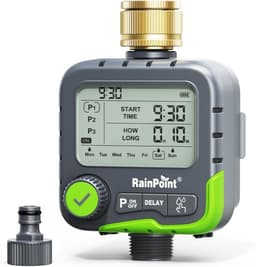
| Alternative |  RAINPOINT RAINPOINT water timer (3 programmes, brass inlet) | AA alkaline; solar accessory optional | Brass | 0.5–8 bar | 8.6 | about £39.99 | View offer |
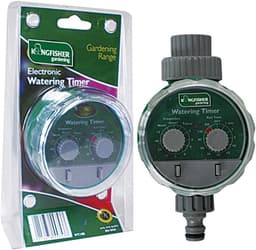
| Best value |  Kingfisher Kingfisher electronic water timer (WT100) | 2× AAA | Not stated | Not stated | 8.0 | about £14.95 | View offer |

Before you open the tap
Fit the timer square
Programme and test
End of season
Common questions
Which way up should the timer sit?
Why is it leaking at the collar?
How do I set the clock correctly?
Can I test without leaving it alone?
When do I take it indoors?
Do I need PTFE tape?
Related pages
Sources
Public UK sources from the research digest for water timers, hosepipe restrictions and outdoor tap fittings. Prices, stars and review counts are the amazon.co.uk lines in the display file. The digest date is 21 October 2026. Re-check each ASIN before you buy.
- Ofwat — Hosepipe bans explained (retrieved 21.10.2026)
- Water Use (Temporary Bans) Order 2010, article 4 (retrieved 21.10.2026)
- Thames Water — hosepipe ban FAQs (retrieved 21.10.2026)
- Water Regs UK — hose union taps and watering systems (retrieved 21.10.2026)
- Southern Water — outside tap fittings leaflet (retrieved 21.10.2026)
- Easy Garden Irrigation — Hozelock water timer buyer’s guide (retrieved 21.10.2026)
- My Green Shed — garden water timers UK 2026 (retrieved 21.10.2026)
- WaterOutle — UK hose timer setup guide (retrieved 21.10.2026)