Independent comparisons. We may earn from shop links. More info

How to install a water butt on a plastic downpipe

Updated: 22 October 2026

The usual failure is a tap you cannot get a can under, a diverter that does not match the pipe, or a cut that sends overflow down the brickwork. This is how to install a water butt when the downpipe is ordinary plastic and the tank is about 100 litres. The order is the base, then the pipe check, then the cut, then the tap, lid and overflow. If the pipe is cast iron, stop before any of that. Rankings live on the [100 litre water butt comparison](/hub/garden-watering/100-litre-water-butt). Peter F. drew the steps from Waterwise, the RHS and RoSPA. There was no lab fit. A purchase through our amazon.co.uk links may earn a commission at no extra cost to you.

The usual failure is a tap you cannot get a can under, a diverter that does not match the pipe, or a cut that sends overflow down the brickwork.

Our top picks

On this page

Before you cut the downpipe

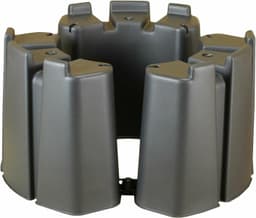
Put the tank where it will live, on a firm level base, before you mark the pipe. Waterwise starts there because a tank that rocks will stress the diverter once it is heavy. A full 100 litres is about 100 kg. Sit the empty butt, stand included, and see whether a watering can slides under the tap. If it does not, the stand is missing or too low. One GN334 reviewer reported the tank tipping at about three-quarters full. Know what is in the box before you cut. The Plant!T GN334 included-components line is the butt only. The Bowers title claims a stand and a downpipe kit, and one verified review says neither arrived. If the title says kit, open it on the path and match the parts. The buying guide is where you decide whether 100 litres and this footprint are right.

Plastic downpipes that kits cite

Measure the outside of the downpipe. Diverters for this size, including the sizes Strata quotes, are made for 68 mm round plastic or 65 mm square plastic. If your pipe is one of those, and it is yours to alter, you can plan the cut. If it is larger, oval, or not on the fitting's card, stop. Cast iron is a stop. Get advice when the pipe is metal, unusually large, shared, or serving next door. You want a plumber or the managing agent before anyone cuts. When the pipe matches, the tank is already on its stand, so the diverter goes in at the height of the inlet. If you chop the downpipe and poke it into the lid, a full tank dumps onto the foundation. Cut less than you think, and keep the offcut. Tool-free is not promised on these listings.

Tap, lid and overflow

Fit the tap while the tank is empty: a washer, a nut you can reach, and a thread you do not cross. On the GN334, reviews split. Some say the tap fits and stays dry. Others report a drip from the first fill, a poorly drilled hole, or a thread that sealed only after PTFE tape. PTFE will not repair a split boss. If the washer cannot sit flat, use the return route. Leave room at the spout for a can. Put the lid on before you walk away. RoSPA says cover or fence off water butts, because children can drown in shallow water. A clip lid is not a certified child lock. Overflow belongs back in the downpipe, then to the drain, not against the wall. In a freeze, Waterwise says empty the butt.

When not to finish the job yourself

Stop if the downpipe is cast iron, an unlisted size, or shared. Stop if the tank would stand on a balcony or a deck with no stated load for about 100 kg plus the stand. Stop if overflow would run into the wall or into a neighbour's garden. Stop if you want a mains top-up. Under the Water Supply (Water Fittings) Regulations 1999 that connection needs an air gap. A collapsible PVC tank changes the base, not the pipe rules. The slimline or collapsible water butt page is that choice. Rain already in the butt is not a refill from the mains. Read the water butt hosepipe ban page before a hot week. If the plastic pipe matches and overflow returns down the pipe, look at the joints after the first heavy shower.

Common questions

What order do I fit the parts?
Level the base, fit the stand, and sit the empty tank so a watering can clears the tap. Then measure a matching plastic downpipe and fit the diverter so overflow continues down the pipe. Fit the tap and washer while the tank is empty, put the lid on, and watch the first rain. Cutting before the tank is in place puts the inlet at the wrong height.
How high does the stand need to be?
High enough for your can to slide under the tap, and stable under about 100 kg. A stand around 30 cm, the figure in the Bowers bullets, is the sort of lift buyers describe, but your can is the test. Loose bricks are a poor substitute because the tank can tip as it fills.
What if the pipe is cast iron?
Leave it. Cast iron, a very large pipe, or a shared stack needs someone who can specify the joint. School and nature-park guidance both treat metal pipe as a stop. Cutting it to suit a plastic collar damages a downpipe you cannot easily replace.
Why does the tap drip?
On the GN334, reviewers report a weep at the spigot, a badly drilled hole, or a thread that needed PTFE tape. A sound washer on a clean thread fixes some of those. It does not fix a cracked outlet. If the leak is in the tank wall, use the seller's return rather than silicone as a structure.
Where does the overflow go?
Back down the downpipe to the drain, which is what a diverter is for when the tank is full. It should not sheet down the wall. If you cannot see that path, do not cut the pipe. Pour a can through the gutter as a test once the fitting is in.

Related pages

Sources

Public UK sources used for hosepipe bans, child safety, non-potable rainwater and garden practice. Listing prices, stars and review counts are the amazon.co.uk lines saved on 19 October 2026. This is not a lab test.

  1. Water Industry Act 1991, section 76 (retrieved 19.10.2026)
  2. The Water Use (Temporary Bans) Order 2010 (retrieved 19.10.2026)
  3. Ofwat — hosepipe bans (retrieved 19.10.2026)
  4. Thames Water — hosepipe ban FAQs (retrieved 19.10.2026)
  5. RoSPA — garden safety (retrieved 19.10.2026)
  6. BS EN 16941-1:2024 scope (retrieved 19.10.2026)
  7. Environment Agency / Waterwise rainwater guide (retrieved 19.10.2026)
  8. RHS — collecting and storing water (retrieved 19.10.2026)