Independent comparisons. We may earn from shop links. More info

How to use ratchet secateurs

Updated: 22 October 2026

You have already bought a ratchet pair, you have squeezed a woody stem, and the blade has stopped halfway with a click. That pause is the mechanism, not a broken tool. The sequence is: seat the stem, squeeze to the stop, ease only to the click, and stop when the wood will not sit in the jaw. This is not a ranking. Model scores stay on the [ratchet scissors comparison](/hub/garden-tree-and-hedge-shears/ratchet-scissors). Peter F. read the listings on amazon.co.uk on 20 October 2026. There was no filmed cut. A qualifying purchase can earn a commission at no extra cost to you.

You have already bought a ratchet pair, you have squeezed a woody stem, and the blade has stopped halfway with a click. That pause is the mechanism, not a broken tool.

Our top picks

On this page

What the click is for

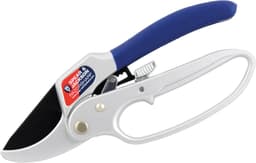
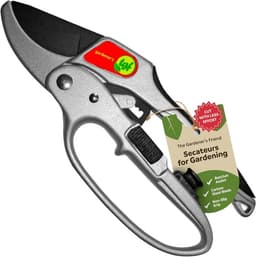
The pawl holds the bite while you ease your hand, then you squeeze again from that new start. Open the handles fully and the pawl drops, so the next squeeze begins at the outside. A guide from the Australian brand 2WP describes that partial release. Capacity is whatever your own listing prints. The 6358RS bullets say four short steps and 20 mm on dead or thicker woody stems. The Gardener's Friend is three-stage, with a 25 mm highlight and bullets up to 1 inch depending on the wood and your strength. Three squeezes on a thin green twig can mean the wrong jaw or a packed groove. If the click never comes, check the lock before you blame the blade. A catch you cannot move is covered on ratchet secateurs for weak hands.

A cut, from seating the stem to the last squeeze

Seat the stem deep in the jaw, close to the pivot. Close to the stop, ease only to the click, and squeeze again until the wood separates. Keep your other hand clear. On a 20 mm woody stem the 6358RS listing describes four short steps. If a thinner stem still will not sever, stop. Do not twist a stuck blade. If you must release a failed cut, open fully, pull the stem out, and clear the groove. Some Gardener's Friend reviews say the ratchet seems to move only when something hard is already in the jaw. Change stem or tool. Live growth may need a different jaw, which anvil or bypass secateurs separates from the click. Lock the blades before they go in a pocket or a trug.

Clean, oil and sharpen the bevel

Sap in the groove is a common reason a ratchet feels seized. The RHS method is a nylon scourer or wire wool with penetrating oil, a wipe, oil on the pivot, then dry storage. Wear gloves with wire wool. Do not grind a PTFE or Teflon face. The 6358RS and MIGIFTDY bullets mention those coatings. Sharpen the bevel only. The RHS says grinding the flat face changes the bite, and the tool should come apart only if it is designed to. Test on paper. A tear means the edge is not ready. Oil will not rebuild a sheared pin, which one stored 6358RS review describes. Stop and speak to the seller. If you are still choosing, the buying guide is the order of checks.

When to put the secateurs down

Stop when the stem will not sit in the jaw. The 6358RS bullets stop at 20 mm. The GRÜNTEK bullets say 24 mm, and the title says bypass while the specification says anvil. The Gardener's Friend highlight says 25 mm. The MIGIFTDY 5.2 cm field is not a capacity. The RHS moves you to a saw above about 25 mm, with an undercut so the bark does not tear. Do not prune a large tree from a ladder with pocket secateurs. HSE ladder guidance is short, low-risk work, no over-reaching, not the top rungs. A limb over a path or a cable, or a crown you cannot reach without stretching, needs someone equipped for that job.

Common questions

Why does the cut stop halfway and click?
The pawl is holding the blade so the next squeeze starts further in. That is the staged cut. Ease only to the click and squeeze again. If you open the handles fully, the mechanism resets and you lose the progress. Makers describe this partial release in their own instructions. A click on a woody stem is expected. A click with no progress on a thin green shoot is a reason to stop and check the jaw.
How far should I open my hand between squeezes?
Only as far as the click, while the stem is still in the cut. A full open drops the pawl back to the start. You will feel the handles suddenly go light if you have gone too far. Seat the stem deep near the pivot, close to the stop, release to the click, and close again. If you are releasing a failed cut, open fully only after you have decided to take the stem out.
What do I do if the blade sticks?
Do not twist it. Open fully if you must release the wood, pull the stem out, and clear sap or fibres from the groove. Stored reviews of the 6358RS describe thin stems jamming, and debris in the groove does the same. If something hard seems to be required before the ratchet will move, as some Gardener's Friend reviews describe, change tool rather than hunting a thicker branch. A sheared pin is a seller conversation, not a harder squeeze.
Are three squeezes on a thin twig normal?
Three or four squeezes are normal on wood that matches the listing, such as four steps on a woody stem within the 6358RS 20 mm bullet. On a thin green twig they often mean the anvil is the wrong jaw, or the groove is packed. Do not keep pumping until the shoot crushes. Switch to a bypass pair for live growth, or clean the blade and try one woody stem that actually seats.
How do I clean sap without wrecking the coating?
Wipe sap before it hardens. The RHS suggests a nylon scourer or wire wool with a penetrating oil, then a wipe, then oil on the pivot, and dry storage. Wear gloves with wire wool. Do not grind a PTFE or Teflon face to get the sap off. Disinfect between diseased plants. If the pivot is dry, the click will feel harsh even when the edge is fine.
Which edge do I sharpen?
Sharpen the bevel only. The RHS warns that grinding the flat face changes the bite. Take the secateurs apart only if they are designed to come apart. Oil the pivot and test on paper. A tear in the paper means the edge is not finished. This does not rebuild a broken spring or a sheared ratchet pin. Those go back to the seller.

Related pages

Sources

Public UK sources for the 25 mm hand-tool limit, sharpening, grip, product safety and the Consumer Rights Act 2015. Listing prices, stars and review counts are the amazon.co.uk lines saved on 20 October 2026.

  1. RHS — how to prune a tree (retrieved 20.10.2026)
  2. RHS — sharpening hand tools (retrieved 20.10.2026)
  3. Arthritis UK — gardening (retrieved 20.10.2026)
  4. Spear & Jackson 6358RS (retrieved 20.10.2026)
  5. GOV.UK — reporting product safety issues (retrieved 20.10.2026)
  6. Pembrokeshire County Council — Consumer Rights Act 2015 (retrieved 20.10.2026)
  7. BBC Gardeners' World — best secateurs (retrieved 20.10.2026)
  8. HSE — ladders (retrieved 20.10.2026)