Independent comparisons. We may earn from shop links. More info

How to use a fruit picker

Updated: 21.10.2026

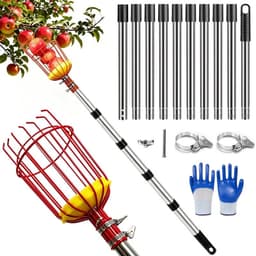
You bought a basket on a pole so the apples would land in cloth instead of on the grass, and so you could stay off the ladder. How to use a fruit picker well is mostly restraint: test the fruit in your hand first, lift and twist with the rim, empty the bag before it is heavy, and put the pole down when it bends or the head is near a cable. The poles themselves are set out in the [fruit picker comparison](/hub/garden-tools/fruit-picker). A qualifying purchase through our links can earn a commission at no extra cost to you.

You bought a basket on a pole so the apples would land in cloth instead of on the grass, and so you could stay off the ladder.

Our top picks

On this page

Check the fruit before you extend the pole

Pick on a dry day. Wet fruit slips in the basket, and wet stalks tear. The RHS and The Orchard Project both start with the fruit in the hand, not with the pole. Cup a low apple in your palm, lift and twist, and see whether the stalk comes away and the spur stays on the tree. If that low fruit will not release, the high fruit is not ready either. Early varieties are for eating soon. Later apples can wait for a second and third pass. Windfalls are a clue, not a starting gun. Some fruit drops because it is ripe, some in the June shed, and some because codling moth has been in it. Taste a sound one from the branch before you extend the pole.

Place, lift, twist

Set the basket under the apple so the stalk sits against the rim or the padded lip, close to the fruit, not at the end of a wild swing. Gardeners' World's method is to position, twist, and keep the basket close. Orchard Notes adds the direction: lift towards the horizontal and let the rim do the work, rather than tugging downwards on the claws. You want the stalk on the apple and the spur still on the tree. A straight yank tears the spur, then the branch springs. If the apple will not come after a lift and a twist, leave it or snip the stalk with secateurs on a later pass. Forcing the basket until the prongs bite is how tips pierce the skin. Fit only enough sections to reach that apple. A pole that flexes will not hold the rim against the stalk.

Empty, sort, and watch the drop

Empty often. A basket that holds three or four apples is already heavy at the end of a 3 m pole, and the next apple lands on the ones below it. Gardeners' World says not to fill the basket and not to throw fruit. Lower the pole and tip into a trug with a short drop. Sort as you tip. Pierced or wasp-bitten fruit can go for cooking today. Sound fruit with the stalk on is the only fruit worth keeping, and the temperatures are on the apple picker page. Look down before you pull the basket back. A child, a dog or your own feet sit in the drop zone when a stalk gives way early. If wasps are in the bag, set it down and step back. The Work at Height Regulations 2005 do not require a householder to hold a ticket to pick their own tree.

When the pole is the wrong tool

Put the pole down when the tube bends, so the rim will not sit on the stalk, when the head rises towards a cable or a washing line, or when the next move is a ladder. Adding the ladder puts you back at height with a long metal tube in your hands. HSE's step-by-step guide treats extendable tools as the way to stay on the ground. It does not say a bending pole is safe once you are on a rung. If the pole you own flexes before it reaches, the fix is a shorter length or a different join, which is the buying guide, not another section screwed on the end. A claw that springs open is a different tool, covered under basket or claw.

Common questions

How many apples should stay in the basket?
Two or three, then empty, is a practical limit on a long pole. Four already stack, so the next apple bruises the ones underneath, and the bag pulls the head off the line you were aiming. Gardeners' World's advice is not to fill the basket. Tip them into a trug with a short drop instead of carrying a heavy bag back through the branches.
How do I know the fruit is ready before I poke it?
On a dry day, cup a low apple in your palm and twist. If the stalk comes away cleanly and the fruit tastes ready, the higher fruit of the same variety is worth trying with the pole. If the low one holds on, stop. Windfalls can mean ripeness, June drop or moth damage, so taste a sound apple from the branch before you strip the tree. Colour alone, and a neighbour's tree, will mislead you by weeks.
What if the apple will not come away?
Leave it on the tree or snip the stalk with secateurs when you can reach it safely another way. Forcing the claws until they bite marks the skin and can wedge the prongs in the branch. Unripe fruit is not a technique problem. A second pass in a week is normal. RHS notes that apples may need three pickings, and dessert fruit for storage can be slightly under-ripe while cookers are often taken once windfalls of that variety have started.
Can I shake the tree instead?
Shaking into a sheet is a rougher job, used when you want volume for juice, not when you want apples that will store. Fruit hits fruit and hits the ground. A basket pole is slower and it keeps the drop inside the bag if you twist and empty. If the pole is only bouncing the branch, you have drifted into shaking. Shorten the pole or stop.
What about wasps in the bag?
Ripe apples, pears and figs draw wasps, and a dark bag hides them. Empty in the open, look before you reach in, and set the basket down if you hear them rather than shaking the bag over the trug. Stings are the practical risk, along with fruit that is already holed. That damaged fruit is for the kitchen today, not for a box in the shed.

Related pages

Sources

Public UK sources used for this comparison. Listing prices, stars, and review counts are from the amazon.co.uk lines in this set. We did not run a lab test.

  1. RHS — Fruit: harvesting (retrieved 21.10.2026)
  2. RHS — Apples: grow your own (retrieved 21.10.2026)
  3. HSE — Work at height: step-by-step guide (retrieved 21.10.2026)
  4. HSE — Work at height FAQs (retrieved 21.10.2026)
  5. GOV.UK — General Product Safety Regulations 2005 (Great Britain) (retrieved 21.10.2026)
  6. legislation.gov.uk — Consumer Rights Act 2015 (retrieved 21.10.2026)
  7. Draper — Telescopic fruit picker 19628 (retrieved 21.10.2026)
  8. Cambridge Clarion — Fruit picker claw notes (retrieved 21.10.2026)