Independent comparisons. We may earn from shop links. More info

Where pond vacuum dirty water should go

Updated: 22 October 2026

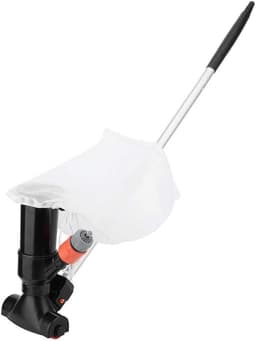
You have filled the tank, or the hose jet is already pushing water back over the liner, and the brown cloud still needs a place to go. Pond vacuum dirty water is mostly pond water carrying silt, leaves, or both, and the destination matters more than the suction. On our [pond vacuum comparison](/hub/garden-ponds/pond-vacuum) the Oase PondoVac Classic holds that mix in a chamber, while the Fdit and the LATERN send it straight through a mesh. This page covers the flower bed, the sewer, and a return to the pond, and it rules out the brook. How you run the session, including the pause when a single chamber fills, stays on the [how to use a pond vacuum](/hub/garden-ponds/pond-vacuum/sub/pond-vacuum-how-to-use) page.

You have filled the tank, or the hose jet is already pushing water back over the liner, and the brown cloud still needs a place to go.

Our top picks

Oase Oase Pondovac Start

Best overall

Oase Oase Pondovac Start
7.3/10about £189.99
Fdit Fdit hose jet

Rank 2

Fdit Fdit hose jet
4.3/10about £19.54
LATERN LATERN hose jet

Rank 3

LATERN LATERN hose jet
3.2/10about £11.99
On this page

A full tank is mostly water

A 27-litre chamber is not 27 litres of mud. Most of what the Oase lifts is pond water, with a thinner load of silt and leaves in it. A long session on a small preformed pond therefore drops the level. Treat the first empty as a sample, and look at the colour in a bucket before you commit to a long session. Tea-brown water that settles slowly is silt. The Royal Horticultural Society says a full clean-out is disruptive, and that a little silt is worth keeping if you are rebuilding a wildlife pond. That note is for a drain-down, not a fixed cycle of vacuuming.

Flower bed, sewer, or a coarse bag

Oase’s scope for the PondoVac Classic, part 50110, splits the job. Discharge can go on a flower bed as organic fertiliser, or it can go via the sewer. The debris bag is for particles larger than about 1 mm, and the same scope says it is not suitable for pond silt. Once the floor is soft mud, that bed and that bag are a poor match. If the discharge stays brown, send it to the bed or to a sewer you are allowed to use. A bed that drains into a gully only moves that silt downhill. The pond vacuum buying guide separates a tank that can hold this water from a jet that cannot.
Oase Oase Pondovac Start

Testsieger

Oase Oase Pondovac Start
7.3/10about £189.99

Not the brook

A brook, a ditch, or any other watercourse is not a flower bed. GOV.UK guidance on discharges to surface water and groundwater says polluting matter needs a permit. Clean rainwater is the exception that page lists. Pond sludge is not that exception. You can aim the hose at the border and still be wrong if that border feeds the brook. If the next shower would carry the water into a stream, choose another spot or stop.

Fish in the pond, and newts in England

Fish can often stay in if you work slowly and keep a narrow nozzle off them. That is retailer practice, not a statute. If one or two fills drop the level on a small pond, stop rather than finish the floor. Great crested newts are the legal stop in England. If you find a newt, or you only suspect them, leave the floor alone. Scotland, Wales, and Northern Ireland have their own rules.

Common questions

Can the dirty water go back in the pond?
Only when you are lifting coarse waste the bag is meant to hold. Oase’s scope for part 50110 says the debris bag is for particles larger than about 1 mm and is not suitable for pond silt. Reviewers saw returned water discolour, and a LATERN review reported silt passing the bag. If the discharge stays tea-brown, send it to the bed or to waste rather than back into the pond.
Can it go on the flower bed?
The Oase instruction allows the discharge on a flower bed as organic fertiliser, or via the sewer. That suits leafy water better than a thick silt pass, and a bed that sheds into a ditch is the wrong bed. The Royal Horticultural Society also allows silt on borders during a full clean. That note is a drain-down, not a weekly habit, and it is not proof that every UK council allows wet sludge on soil.
Can it go in the ditch or the brook?
No. GOV.UK guidance on discharges to surface water and groundwater says polluting matter needs a permit, and the listed exception is clean rainwater, not sludge. Pond vacuum dirty water carries silt and other settled matter, so a ditch or a brook is out. A flower bed that drains into that ditch is the same problem one step earlier. If you cannot see where the hose water will travel, do not open the outlet.
What if I have nowhere but the bin?
Drain the water on a bed or into a container, then deal with the solids. Southend is one English council that treats drained silt as residual waste, which is an example, not a national bin rule. Check your own council before you bag wet mud, because a soaked sack splits. With no bed, no sewer you may use, and no council route, stop until you have one.
Can the fish stay in?
They can, if you move slowly and keep a narrow nozzle clear of them. Retailers describe the tools that way, and it is not a law that makes the session safe. A long run on a small pond lowers the level, because a 27-litre chamber is mostly water. If the fish are gulping in cloudy water, or a shelf is nearly dry, stop and let the pond settle. A full drain-down is a separate, more disruptive job.
What if I might have great crested newts?
Stop, and do not start the clean. In England, great crested newts are protected. GOV.UK says standard management is often unlicensed when you have planned it, typically from early November to late January, and that you must not dump silt on their habitat. Finding one during a pass means you stop. That page is England. In Scotland, Wales, or Northern Ireland, follow the wildlife rules there rather than copying the English season.

Related pages

Sources

Public UK sources for this comparison. Listing prices and stars were taken from amazon.co.uk on 19 October 2026.

  1. Oase PondoVac Classic (50110) (retrieved 19 October 2026)
  2. Oase PondoVac 3 (retrieved 19 October 2026)
  3. Hozelock Pond Vac (retrieved 19 October 2026)
  4. Electrical Safety First: garden electrics (retrieved 19 October 2026)
  5. Voltimum UK: electrical installations in the garden (retrieved 19 October 2026)
  6. GOV.UK: great crested newts, protection, surveys and licences (retrieved 19 October 2026)
  7. GOV.UK: discharges to surface water and groundwater (retrieved 19 October 2026)
  8. Aquatix-2u: how a pond vacuum works (retrieved 19 October 2026)