Independent comparisons. We may earn from shop links. More info

Petrol vs electric log splitter

Updated: 22 October 2026

You already have a 13 A socket in the shed, and the sales pages are trying to sell you a petrol engine anyway. Petrol vs electric log splitter is that fork alone: whether the cable is enough, or whether fuel, noise, and a heavier machine are worth it. The [petrol log splitter comparison](/hub/forestry-tools/petrol-log-splitter) holds the petrol rows. Peter F. compared those amazon.co.uk listings with public UK guides in October 2026, and did not run a side-by-side split. A qualifying purchase can earn a commission at no extra cost to you.

You already have a 13 A socket in the shed, and the sales pages are trying to sell you a petrol engine anyway.

Our top picks

Lazy-Log Lazy-Log LS-4 22 ton

Best overall

Lazy-Log Lazy-Log LS-4 22 ton
8.2/10about £1,495.95
Rotatech Rotatech RTP-GL-22T

Rank 2

Rotatech Rotatech RTP-GL-22T
1.4/10about £1,599.99
SIP SIP 01987 8 ton

Rank 3

SIP SIP 01987 8 ton
1.0/10about £1,048.17
On this page

The only question that matters first

Ask where the wood sits and how much you process in a year. If the pile is within a safe outdoor lead of a BS 1363 socket and the rounds are already stove-sized, electric is the default for most UK households. One buying guide frames electric as enough for many homes up to roughly ten cubic metres a year, and petrol as the next step when volume climbs toward twelve cubic metres or the site has no usable cable. Those figures are rules of thumb, not meters on your driveway. Distance alone is not an automatic petrol vote. A long garden with a socket at the house and a pile at the far fence may still favour electric if you can stage the wood nearer the supply, or hire a petrol machine for the one weekend you clear the far end. Petrol becomes rational when the cable will not reach safely, when rounds are too large or knotty for the electric machines you can actually buy, or when you move between off-grid piles every season. The wider checklist is the petrol log splitter buying guide.

What a 13 A electric splitter actually does

A domestic electric hydraulic on a normal UK plug is quiet enough to use beside a neighbour's fence without the same exhaust complaint, and it needs no petrol can in the shed. Round-ups of UK electric splitters cluster many household machines around 4-8 tonnes of claimed force on 13 A, with vertical 3000 W units also appearing when the listing states a proper supply. Use an RCD outdoors. Avoid long, thin extension leads that starve the motor. A thin lead is a common reason a 7 ton electric stalls on a damp oak round that the badge promised to open. Electric has hard stops. Metre-length trunk sections, distant woodland piles, and days when you would otherwise run a generator just to feed a splitter all push you off the socket. Force claims are seller peaks on both sides, so a similar tonne number is not a fair contest. If your rounds fit a domestic beam and the plug is honest, stay with an electric log splitter and skip the petrol cost.
Lazy-Log Lazy-Log LS-4 22 ton

Testsieger

Lazy-Log Lazy-Log LS-4 22 ton
8.2/10about £1,495.95

What petrol adds, and what it costs

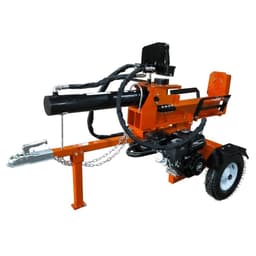
Petrol adds work without a cable, higher force options in the same shopping trip, and the ability to work at a field or woodland edge. In this set the hydraulic band runs from the SIP 8-ton at about £1,048.17 to Lazy-Log at about £1,495.95 and Rotatech at about £1,599.99. You also accept noise, exhaust, fuel storage, and the chance that E10 is the wrong petrol for the engine. Run outdoors only. Carbon monoxide in a closed shed is not a theoretical risk. Lazy-Log's stated 635 mm by 485 mm capacity and 18-second cycle show what a petrol listing can offer when size and speed are printed. SIP's 93.5 kg horizontal with wheels is a mid machine you can pull across a yard. Those strengths do not make petrol better for a socket-side stove load. They make it the tool for sites electric cannot reach. STAXXR and LUPENGSHOP, the 64 cc cones at about £169.00 and about £478.76, are screw-style petrol tools, not a quiet electric substitute, and they do not settle this fork.

Hire instead of owning either

Hire is the third path when you need petrol force rarely. TFM lists an Oxdale SE400 petrol splitter at £67.50 for the first day and £168.75 for a week. Mammoth's published 24-hour rate including VAT sits around £225.18 before delivery. Against a £1,000 to £1,600 purchase, a few hire weekends a year often win. Garden Review's rule of thumb, more than about a week of hire a year, is useful after you already know petrol is required. Hire also lets you test vertical mode and real cycle feel before you commit to a listing that carries one review or none. If a single storm created the pile, hire petrol for a day, leave the socket machine for winter topping-up, and do not invent a permanent fleet. Read length and diameter before the tonne badge on what tonnage log splitter only if petrol still wins.

Common questions

Is electric enough for a normal UK stove household?
Often yes, if the woodpile is near a socket and the rounds are stove-sized. A rule of thumb around ten cubic metres a year favours electric for many homes. Treat that as guidance, not a meter reading. A few barrow-loads beside a 13 A socket are usually not a petrol purchase.
When does petrol become the rational buy?
When the cable will not reach safely, when rounds outgrow the domestic electric machines you can plug in, or when seasonal volume away from the house would make repeated hire more expensive than ownership. A far fence alone is not that test.
How loud and smelly is petrol next to a neighbour's fence?
Louder and smellier than electric. Plan outdoor use, wind direction, and timing. Do not run the engine in a closed shed, even with the door slightly open. Carbon monoxide builds in that space. Electric avoids the petrol can and the exhaust complaint.
Can a 13 A electric match an 8-ton petrol badge?
Not as a fair badge-to-badge contest. Both figures are seller claims. Many household electrics cluster around 4-8 tonnes on 13 A. Petrol options here go higher in claimed force, and Lazy-Log also prints a 485 mm diameter. Match size limits and site power first.
What about kinetic machines on either power source?
Kinetic splitters prioritise a fast stroke on straight logs and a weaker long push through knots. They appear on both power stories in the wider market. Compare them as a mechanism choice. They are not proof that petrol always wins, and none of these five petrol rows is kinetic.
Is hire a third option between the two?
Yes. Published UK examples are about £67.50 for a first day and about £225.18 for 24 hours including VAT, delivery extra. That can beat buying petrol for occasional work, and it leaves an electric machine for small winter batches.
Do I need petrol just because the woodpile is at the far end of the garden?
Not automatically. Stage wood nearer the socket, use a safe heavy-duty lead where appropriate, or hire petrol for the far-end clear-up. Owning a four-stroke year-round is the wrong answer to one weekend at the fence.
Are taper-screw petrol drills an electric alternative?
No. STAXXR and LUPENGSHOP are a different petrol mechanism, a spinning tapered drill, not a small hydraulic ram. They do not replace a quiet electric hydraulic for socket-side stove wood, and they do not decide petrol versus electric.

Related pages

Sources

Public UK sources from the research digest, last checked on 22 October 2026. Listing prices, stars and review counts are the amazon.co.uk figures saved for these five ASINs.

  1. HSE firewood processors bulletin (retrieved 22 October 2026)
  2. Supply of Machinery (Safety) Regulations 2008 (retrieved 22 October 2026)
  3. GOV.UK machinery guide (retrieved 22 October 2026)
  4. HSE PUWER overview (retrieved 22 October 2026)
  5. BS EN 609-1:2017 wedge log splitters (retrieved 22 October 2026)
  6. HSE petrol storage (retrieved 22 October 2026)
  7. GOV.UK E10 petrol (retrieved 22 October 2026)
  8. GOV.UK towing checks (retrieved 22 October 2026)
  9. Garden Review petrol log splitter guide (retrieved 22 October 2026)