Independent comparisons. We may earn from shop links. More info

How to apply silicone sealant

Updated: 23 October 2026

You already have a tube or a cartridge, and the last bead failed because the old silicone was still there, the joint was damp, or the shower was used the same evening. This page is the order of work for a silicone bead in a UK bathroom. We used maker application notes and the review pattern in our [sealant comparison](/hub/fillers-adhesives-and-sprays/sealant), not a site visit. A qualifying purchase can earn a commission at no extra cost to you.

You already have a tube or a cartridge, and the last bead failed because the old silicone was still there, the joint was damp, or the shower was used the same evening.

Our top picks

On this page

Remove the old bead and dry the joint

A new layer on a mouldy or loose bead does not bond. Cut the old silicone out. A plastic scraper is kinder to acrylic and enamel than a blade along the glaze. A refresh coat is only for a sound seal, and only when the label allows it. Wipe dust and soap scum, then dry the gap, including the void. Mask both sides and pull the tape while the bead is still soft. If you are holding a peel-and-stick strip, read silicone versus a sealant strip. Check the date first. Everbuild’s general-purpose example is 24 months, and expired stock in this set can extrude and still fail to cure.

Cut, apply, and tool

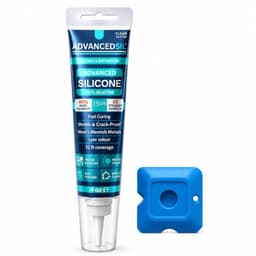
Cut the nozzle at about 45 degrees, a little wider than the gap, and start above the thread. Seat a cartridge, puncture the inner seal, and test a bead on card. Push the paste into the joint at one speed. Tool within the skin time: on the Everbuild general-purpose sheet, about 15 minutes at 20°C, with a spatula or finger wetted in dilute washing-up liquid. A late pass pulls the silicone off the tile. Peel the tape while the edges are live. The 151 tube’s narrow nozzle suits taps and is easy to under-extrude. ADVANCEDSIL’s finishing tool neatens a patch. Ventilate. The vinegar smell is acetic acid from an acetoxy cure.

Depth, movement, and an acrylic bath

A bead stuck to three faces splits. The Everbuild general-purpose sheet says the joint should stick to two faces only, with backer rod so the depth stays no more than about half the width, on a family joint of 4 mm to 25 mm. Everbuild Forever White’s sheet says to fill an acrylic bath about half full while you seal and while it cures. That line belongs to the product that prints it. If your cartridge is silent, do not seal an empty bath that will drop on first use. A stained ceiling, a dropped tray or hollow tiles are not a nozzle problem. Stop. The same stop covers a pool, an aquarium, a gas flue or a façade joint.

How long to leave it

The 151 listing states a 24-hour full cure. Everbuild’s general-purpose sheet is about 2 mm in 24 hours, so a deep bead takes longer. UniBond’s FAQ puts a typical silicone around 16 to 24 hours. Skin in about 15 minutes is not a cured seal, and a shower on a soft bead washes it out. A shower-in-one-hour line belongs only to the pack that prints it, and it is not on these eight listings. The sanitary cartridge has no reseal cap in reviews, the 151 tube dries in the nozzle, and ADVANCEDSIL sets hard. Finish in one session.

Common questions

Do I have to cut out the old silicone?
Yes, if the bead is mouldy, loose, or cracked. A coat on top of failed silicone does not stick, and it traps the mould. A refresh product, used on a seal that still works and only when the label allows it, is the narrow exception.
How do I cut the nozzle?
At about 45 degrees, a little wider than the gap, and not so far down that the hole is a flood. Practise on card. The 151 tube’s narrow nozzle is the point of that small pack. Opening it fully makes a messy tap repair and empties 70 g too fast.
What do I smooth the bead with?
A spatula or a dedicated smoother, wetted with dilute washing-up liquid, within the skin time. ADVANCEDSIL and the MAGOSIS tape include a smoother. A finger works if it is soapy and you are not smearing paste into the grout. Tooling after the skin has formed pulls the bead off.
How long before a shower?
Follow the cartridge you opened. A common silicone cure is about a day, and a thicker bead in a cold room takes longer. The 151 listing says 24 hours. Everbuild’s family sheet is about 2 mm in 24 hours. Do not shower in an hour unless that sentence is printed on your pack. It is not printed on these listings.
Why did the tube go solid?
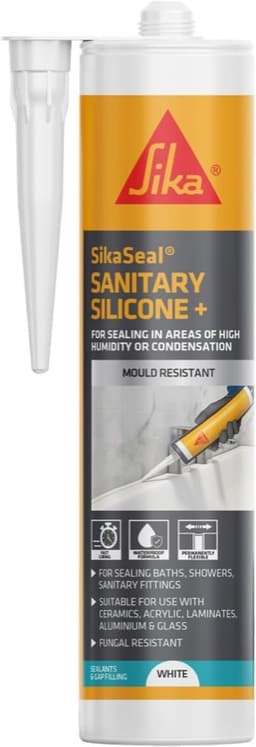
Air reached the paste. That is expected once the nozzle is open, and it is why a small tube suits one job. The 151 reviews mention drying in the nozzle if you come back later. ADVANCEDSIL reviews mention the tube setting hard. A missing cap on the sanitary cartridge makes the same problem worse. It is not a defect the first afternoon.
How deep should the bead be?
Deep enough to meet both faces, and not so deep that it also sticks to the back of the gap. On the Everbuild general-purpose sheet, depth should stay in ratio with width, with backer rod in a deep void, and the family joint is 4 mm to 25 mm wide.
When should I stop and call someone?
Stop if water is staining a ceiling or the other side of a wall, if the tray has dropped, or if tiles sound hollow. Also stop for a pool, an aquarium, a gas flue, or a façade joint. Those are not a DIY bead. A landlord repair for penetrating damp is the same boundary if you rent.

Related pages

Sources

Public UK sources used for this comparison. amazon.co.uk prices, stars and review counts are the stored listing snapshot in the digest, not a live scrape. The digest does not give a separate retrieval date.

  1. Sika Everbuild general-purpose silicone (retrieved 22 October 2026)
  2. UniBond sanitary silicone sheet (retrieved 22 October 2026)
  3. UniBond Triple Protection sheet (retrieved 22 October 2026)
  4. Soudal UK acetoxy and neutral-cure FAQ (retrieved 22 October 2026)
  5. Soudal UK silicone on natural stone (retrieved 22 October 2026)
  6. Soudal sealing strip technical data sheet (retrieved 22 October 2026)
  7. GOV.UK damp and mould (retrieved 22 October 2026)
  8. GOV.UK construction products (retrieved 22 October 2026)
  9. BSI EN 15651 series (retrieved 22 October 2026)