Independent comparisons. We may earn from shop links. More info

How to use a lash glue ring

Updated: 23 October 2026

You have a plastic ring and a bottle of lash adhesive, and the first set is where people overfill the well or let the nozzle touch the cup. This is how to use a lash glue ring: band on, small drop, cap on, dip the base of the lash, then bin the ring. The [glue ring comparison](/hub/fillers-adhesives-and-sprays/glue-ring) is where the packs differ. Licensing and the COSHH side of the adhesive sit on the hygiene page, not in these steps. The sequence comes from Scratch Magazine, Fabulash, a Highclass Lashes training page, and the HSE sheet on cyanoacrylate. Nothing here was filmed in a salon. A qualifying purchase can earn a commission at no extra cost to you.

You have a plastic ring and a bottle of lash adhesive, and the first set is where people overfill the well or let the nozzle touch the cup.

Our top picks

On this page

Put the ring on before you open the bottle

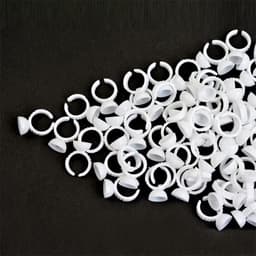
Use the non-dominant hand, the one not holding the tweezers. Stretch the band before you slide it on. Highclass Lashes tells students to stretch so the ring does not cut circulation. If the finger goes pale or numb, that pack is too tight, even when the listing says most finger sizes. YANTAISIYU’s size S reviews, which call the rings tiny, are that mistake. Take it off. Scratch Magazine puts the ring on the middle finger so the well stays upright. Highclass puts it on the thumb or index. Both can be right if the cup stays level. A ring that twists will spill. Settle the band, then reach for the bottle. Shape, stated V cuts and pack size are on the lash glue rings buying guide. One UK review of the Nazeauf rings says the cuts are not deep enough for fanning.

A small drop, then the cap

Dispense less than a full well. Highclass describes one drop. Yegi Beauty’s page describes two to three. Both mean a small amount you can dip into, not a cup filled to the rim. Overfilling spills, and body heat can warm the drop. Keep the bottle nozzle off the ring. Scratch is explicit: the nozzle must not touch the plastic, and the lid goes straight back on. Contact with a used well carries dried adhesive and fibres back into the bottle. Wipe the nozzle if your training says to, then cap the bottle before you pick up a lash. If the drop skins over, replace it. Do not stir it back to life.

Dip, place, and refresh

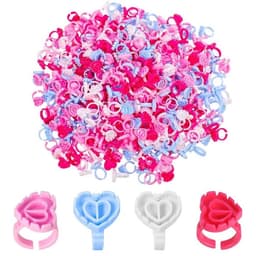
Dip only the base of the extension, not a long soaked length. The point of a ring is a short trip from the well to the lash line. Place the extension, then go back for the next dip. Refresh the drop when it thickens. Fabulash says to replace the ring when you renew the adhesive, and to dispose of it after the adhesive has cured. Scratch says to dispose of the ring as part of the clean setup. For one client, that means one ring, then the bin, even when the listing never printed disposable. A second drop in the same well is a refresh during one set. A second client in the same well belongs on the lash glue ring hygiene page. A heart outline does not separate lashes into a fan.

When to stop and get help

Cyanoacrylate, the usual lash adhesive, can bond skin or eyes in seconds, and the vapour irritates. That is the Health and Safety Executive’s description in sheet SR22, and it applies to the liquid, not the plastic. If adhesive gets on skin, do not pull the bonded skin apart. Follow the bottle’s first-aid line and the safety data sheet. If adhesive is in or near the eye, or if you or the client has trouble breathing or swelling, that is a clinician. This page will not invent a home remedy for glue in the eye. A ring does not teach isolation. If you are still learning how to separate natural lashes, a trained technician should take over that part. The ring only holds the drop. Ask your council before you advertise treatments if you do not already know the local rule.

Common questions

How much adhesive goes in the well?
A small drop, not a full cup. One training page says one drop and a retail page says two to three. Use whichever amount stays inside the well when your hand moves. If it spills, you have used too much.
Should the bottle nozzle touch the ring?
No. Scratch tells technicians to keep the nozzle off the ring, wipe if needed, and put the lid straight back on. Touching a used well with the nozzle carries debris back into the bottle. Cap the bottle before you continue the set. An open nozzle is also an open source of vapour.
When do you throw the ring away?
After that client, once you are finished with the drop. Fabulash says to use a new ring when you renew the adhesive and to throw the ring away after the adhesive has cured. A thickened drop during one set can be replaced in the same session. The next client needs their own ring unless you are following a cleaning method the maker actually printed.
What if the band is tight?
Take it off. A tight ring that changes colour in the finger is the wrong size, not a break-in period. Stretching is what the training page suggests before you start, and it is not permission to cut off circulation for an hour. Choose another pack, or a larger finger that still keeps the well upright, and stop if the hand tingles.
Do you need a professional for isolation, not just for the ring?
Yes, if isolation is the skill you do not have yet. The ring is a holder. Separating natural lashes, picking an adhesive, and dealing with a reaction are the point where a trained technician should take over. Adhesive in the eye, breathing trouble or swelling needs a clinician. A council question about premises is not answered by a product bullet.

Related pages

Sources

Public UK sources used for this comparison. amazon.co.uk prices, stars and review counts were taken from the saved listings, not a live check on 19 October 2026.

  1. HSE SR22 solvent-based adhesives (retrieved 19 October 2026)
  2. HSE COSHH assessment (retrieved 19 October 2026)
  3. Consumer Rights Act 2015, goods quality and description (retrieved 19 October 2026)
  4. GOV.UK special-treatment premises licensing (retrieved 19 October 2026)
  5. Scratch Magazine, lash treatment hygiene (retrieved 19 October 2026)
  6. Fabulash, sterilising tools (retrieved 19 October 2026)
  7. OPSS serious undesirable effects for cosmetics (retrieved 19 October 2026)
  8. amazon.co.uk listings for the twelve ASINs in this set (retrieved 19 October 2026)