Independent comparisons. We may earn from shop links. More info

Olive tree fertiliser for pots before a larger can

Updated: October 2026

A container olive on a British patio has to cope with saturated winter compost, restricted roots and a move into shelter before fertiliser is the main question. The right olive tree fertiliser for pots is part of a system: free-draining compost, an open drainage hole, pot feet and a measured feed during active growth. Liquids and sticks are on the [olive tree fertiliser comparison](/hub/fertiliser-soil-and-bark-mulch/olive-tree-fertiliser). A larger bottle cannot rescue roots standing in cold water. This page is from Peter F., the DIY and tools editor, in October 2026. If you buy through a link, we may earn a commission at no extra cost to you.

A container olive on a British patio has to cope with saturated winter compost, restricted roots and a move into shelter before fertiliser is the main question.

Our top picks

On this page

Why UK olive trees are often grown in pots

A container lets you keep an olive in summer sun and move it somewhere frost-free and bright. The roots then depend on the compost and the water you give them. In a 30 to 35 cm pot, water and soluble nutrients change faster than in open ground. The RHS recommends gritty, loam-based compost. A substantial pot steadies a top-heavy crown. A small root ball in a huge container can sit in wet compost, so increase the size sensibly and keep the drainage hole clear. Feeding comes after that. A balanced liquid in the growing season can help if you want fruit, and it does not guarantee a crop. An olive you have just repotted often needs no immediate extra dose.

Build drainage before choosing a feed

Use a loam-based mix with added grit rather than dense compost that collapses around the roots. The aim is not a pot that dries in an hour. Excess water should leave, while the root ball keeps enough moisture. Check the drainage hole when you repot, and raise the container on pot feet, especially through a wet UK autumn and winter. A saucer can protect a surface in summer. It should not become a permanent reservoir. Empty standing water after watering or rain. If the compost smells sour, the trunk base feels soft, or roots are dark and decaying, put the fertiliser away and look at root health. More nutrients are another stress on roots that cannot work. Controlled-release granules can go in at planting when the product label allows it. That is different from pouring liquid feed straight afterwards. Note what the compost and the granules already supply, then wait as those labels say. Stacking several mild sources can still be a strong dose. If yellow leaves brought you here, wet roots, winter shedding and leaf spots come before a purchase, in olive tree yellow leaves.

Choose a practical feed for the container

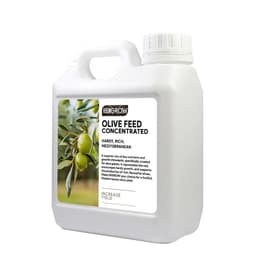
For an established pot in growth, a measured liquid gives the most control. The RHS pattern used here is a monthly balanced liquid when fruit is wanted. The concentration still comes from your label. Olive Focus states 10 ml per litre and names olives in pots, conservatories and greenhouses. The title says 300 ml and the fields say two items and 600 ml, so confirm the pack. The listing says to alternate with plain water. The bottle takes priority if another page gives a different rhythm. Sticks suit you if you will not mix a can. Devonia says to push them in and replace them up to every 12 weeks. The title says 18 sticks and the file records nine items. An unknown number in a small pot is not an accurate dose. The five- and ten-litre UK GROW cans have no usable ratio and share a thin rating line with the 500 ml bottle, which is a small pack and still prints no millilitres per litre. Form and pack clarity are in the olive tree fertiliser buying guide.

Feed in summer, protect in winter

Wait for active growth rather than feeding a cold, saturated pot by the calendar. Check moisture below the surface, use the diluted feed the label states, and do not strengthen the mix because growth seems slow. A late nitrogen-rich feed pushes soft growth into falling temperatures. Stop routine feeding as the season ends and move the pot. Do not put it back outside until the frost risk has passed where you are. Under cover, a conservatory pot can dry differently from one outside, and an unheated greenhouse may stay cool and damp. Water to the compost, not to a summer rhythm.

Common questions

What compost should I use for a potted olive?
Use a gritty, loam-based compost with a clear drainage route. The RHS recommends this kind of structure for container olives. Pot feet help water escape, particularly during wet UK winters.
Should I feed immediately after repotting?
Often no. Fresh compost or controlled-release granules may already supply nutrients for the first months. Check those labels, and let disturbed roots settle before you add another feed.
Are liquid feeds better than sticks in a pot?
Liquid gives finer control if you measure accurately. Sticks reduce mixing, but you must know the correct number for the pot and verify the pack count. Both depend on healthy drainage.
Is a ten-litre can sensible for one container?
It is rarely the practical choice. You need a clear dose, enough storage and enough plants to use it within its stated life. A smaller bottle whose pack you can verify is usually easier to manage.
When should I bring a potted olive inside?
Move a young or vulnerable pot to a bright, frost-free place before damaging cold, then keep it sheltered as conditions require. Local exposure varies, so do not rely on one nationwide date.
Will feeding make my olive produce fruit?
Balanced feeding can support growth and fruiting, and it cannot guarantee fruit. Light, warmth, maturity, flowering and pollination also affect the result, and too much feed can make weak growth.

Related pages

Sources

Public UK and maker sources from the research digest, used for this page in October 2026. Prices, stars and review counts are from the seven amazon.co.uk listings captured on 21 October 2026. A 1:249 or 4:1:7 line is not treated as an NPK. Spanish review texts are not UK trials. No laboratory compared these products.

  1. RHS, How to grow olives (retrieved 21 October 2026)
  2. RHS, How to feed plants (retrieved 21 October 2026)
  3. RHS, Preventing winter damage (retrieved 21 October 2026)
  4. RHS, Growing plants in containers (retrieved 21 October 2026)
  5. Olive Focus maker (retrieved 21 October 2026)
  6. Palm Centre, Olive Focus (retrieved 21 October 2026)
  7. Fertilising Products Regulations 2020 (retrieved 21 October 2026)
  8. Regulation (EU) 2019/1009 Annex III (retrieved 21 October 2026)