Mediterranean plant fertiliser: checks before you buy
You have a lemon in a pot and an olive beside it, and the results all say Mediterranean. A Mediterranean plant fertiliser has to name the plants you grow, come in a form you can apply, and match the number of pots. An all-purpose liquid is a different product. A 20 kg sack is a different purchase from a 500 ml bottle. This guide stays on those rules. The [Mediterranean plant food comparison](/hub/fertiliser-soil-and-bark-mulch/mediterranean-plant-food) holds the four amazon.co.uk listings we kept, with prices in GBP. Those listings were read on 21 October 2026. There was no lab test. A qualifying purchase through our links can earn us a commission at no extra cost to you.
You have a lemon in a pot and an olive beside it, and the results all say Mediterranean. A Mediterranean plant fertiliser has to name the plants you grow, come in a form you can apply, and match the number of pots.
You have a lemon in a pot and an olive beside it, and the results all say Mediterranean. A Mediterranean plant fertiliser has to name the plants you grow, come in a form you can apply, and match the number of pots. An all-purpose liquid is a different product. A 20 kg sack is a different purchase from a 500 ml bottle. This guide stays on those rules. The Mediterranean plant food comparison holds the four amazon.co.uk listings we kept, with prices in GBP. Those listings were read on 21 October 2026. There was no lab test. A qualifying purchase through our links can earn us a commission at no extra cost to you.
Our top picks
| Badge | Product | Form | Stated plants | Pack size | Note | Price | Offer |
|---|---|---|---|---|---|---|---|
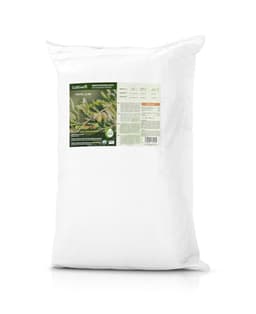
| Best overall |  Cultivers Cultivers organic olive and Mediterranean granules, 20 kg | Granules | Olive and Mediterranean | 20 kg | 4.1 | about £56.28 | View offer |
| Best value |  Algoflash Algoflash Alimed Mediterranean plant fertiliser, 750 ml | Liquid | Mediterranean plants | 750 ml | 3.3 | about £17.79 | View offer |
 Substral Substral Naturen long-term citrus and Mediterranean, 1.2 kg | Paste | Lemon, orange, mandarin, oleander, hibiscus, olive, fig | 1.2 kg | 4.9 | about £19.19 | View offer |


On this page
What the label has to name
Liquid, long-term, or a large sack
Citrus calendar versus olive calendar
What the prices in this set can tell you
Questions before you order
Common questions
Is an all-purpose liquid the same as Mediterranean plant food?
Do I need a different bottle for a lemon and an olive?
Is a liquid better than something I apply once?
When is 20 kg too much?
Can I rely on the star rating if the reviews are not from the UK?
What if the listing has no dilution?
Related pages
Sources
Public UK sources from the research digest, used for this page in October 2026. Prices, stars and review counts are from the four amazon.co.uk listings captured on 21 October 2026. A star line is not a count of UK reviews. Organic wording is quoted from the listing, and no UK organic body is named. Oleander toxicity is the Royal Horticultural Society plant note, not a result of feeding.
- RHS, How to grow citrus (retrieved 21 October 2026)
- RHS, How to grow olives (retrieved 21 October 2026)
- RHS, Citrus problems (retrieved 21 October 2026)
- RHS, Nutrient deficiencies (retrieved 21 October 2026)
- RHS, How to feed plants (retrieved 21 October 2026)
- GOV.UK, Manufacturing and marketing fertilisers (retrieved 21 October 2026)
- Fertilising Products Regulations 2020 (retrieved 21 October 2026)
- RHS, Oleander (Nerium oleander) (retrieved 21 October 2026)