Yellow leaves and iron deficiency on youngest growth
Yellow leaves and iron deficiency are not the same thing. Iron shortage usually shows on the youngest leaves, yellow between veins that stay green. Nitrogen, magnesium, manganese, drought, wet roots and chalk can yellow a plant as well. This page is the check before you order. It does not rank products. Dilution is on [how to apply iron fertiliser](/hub/fertiliser-soil-and-bark-mulch/iron-fertiliser/sub/iron-fertiliser-how-to-apply). The shelf is the [iron fertiliser comparison](/hub/fertiliser-soil-and-bark-mulch/iron-fertiliser). Peter F., the DIY and tools editor, updated this on 21 October 2026 from Royal Horticultural Society guidance and those listings. This is not a laboratory test. A qualifying purchase can earn a commission at no extra cost to you.
Yellow leaves and iron deficiency are not the same thing. Iron shortage usually shows on the youngest leaves, yellow between veins that stay green.
Yellow leaves and iron deficiency are not the same thing. Iron shortage usually shows on the youngest leaves, yellow between veins that stay green. Nitrogen, magnesium, manganese, drought, wet roots and chalk can yellow a plant as well. This page is the check before you order. It does not rank products. Dilution is on how to apply iron fertiliser. The shelf is the iron fertiliser comparison. Peter F., the DIY and tools editor, updated this on 21 October 2026 from Royal Horticultural Society guidance and those listings. This is not a laboratory test. A qualifying purchase can earn a commission at no extra cost to you.
Our top picks
| Badge | Product | Iron form | Plants named | Chelate named | Note | Price | Offer |
|---|---|---|---|---|---|---|---|
| Best overall |  Doff Doff Sequestered Iron Plant Tonic | Sequestered iron powder | All plants | Agent not named | 7.3 | about £5.99 | View offer |
 Maxicrop Maxicrop Sequestered Iron 500 ml | Sequestered iron with seaweed | Acid-loving plants | EDTA, DTPA and EDDHA not named | 8.9 | about £7.14 | View offer | |
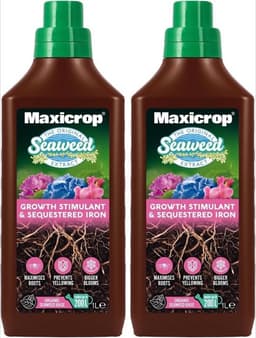
| Alternative |  Maxicrop Maxicrop Sequestered Iron 2 x 1 litre | Sequestered iron with seaweed | Acid-loving plants | Agent not named | 6.4 | about £17.00 | View offer |


On this page
Where the yellow leaves are
Magnesium, manganese and nitrogen
Chalk, compost and tap water
What sequestered iron can do this season
When iron is the wrong long-term plan
Common questions
Are yellow leaves always iron deficiency?
Which leaves go yellow first if the plant is short of iron?
How does magnesium deficiency look different?
Will iron fix drought, wet roots or a lack of nitrogen?
Can I keep a camellia in chalk if I feed iron every year?
When should I test the soil or get help instead?
Related pages
Sources
Public UK and maker sources from the research digest, used for this page in October 2026. Prices, stars and review counts are from the ten amazon.co.uk listings. A Soil Association line is an organic-growing claim, not a pet study. The Maxicrop 2% and 45 ml figures are from the professional sheet, not from the amazon mixing field. Chelate pH bands from a US extension summary are not UK law.
- RHS, nutrient deficiencies (retrieved October 2026)
- RHS, chalky soils (retrieved October 2026)
- RHS, moss in lawns (retrieved October 2026)
- GOV.UK, manufacturing and marketing fertilisers (retrieved October 2026)
- legislation.gov.uk, Regulation (EC) No 2003/2003, Article 9 (retrieved October 2026)
- HSE, garden and home pesticides (retrieved October 2026)
- Maxicrop professional iron sheet (retrieved October 2026)
- Easy-Life Ferro (retrieved October 2026)