How to turn hydrangeas blue on acid soil or in a pot
The mophead you bought as blue opened pink, and a tub on amazon.co.uk says it will turn hydrangeas blue. Blue is a soil and species outcome, not a promise in the packet. This page says which plants can move, which stay as they are, and why a chalk border often will not shift however much salt you add. It does not rank the listings and it does not give a gram recipe. The [hydrangea fertiliser comparison](/hub/fertiliser-soil-and-bark-mulch/hydrangea-fertiliser) is the product table. The plant facts are from the Royal Horticultural Society and BBC Gardeners' World, not from a trial in our garden. A qualifying purchase can earn a commission at no extra cost to you.
The mophead you bought as blue opened pink, and a tub on amazon.co.uk says it will turn hydrangeas blue. Blue is a soil and species outcome, not a promise in the packet.
The mophead you bought as blue opened pink, and a tub on amazon.co.uk says it will turn hydrangeas blue. Blue is a soil and species outcome, not a promise in the packet. This page says which plants can move, which stay as they are, and why a chalk border often will not shift however much salt you add. It does not rank the listings and it does not give a gram recipe. The hydrangea fertiliser comparison is the product table. The plant facts are from the Royal Horticultural Society and BBC Gardeners' World, not from a trial in our garden. A qualifying purchase can earn a commission at no extra cost to you.
Our top picks
| Badge | Product | Job | Pack size | Colour claim | Note | Price | Offer |
|---|---|---|---|---|---|---|---|
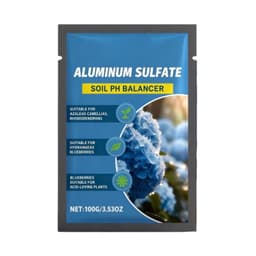
| Best overall |  Generic Generic aluminium sulphate hydrangea acidifier, 100 g | Acidifier | 100 g title, 119 g | Blue blooms claimed | 7.6 | about £5.30 | View offer |
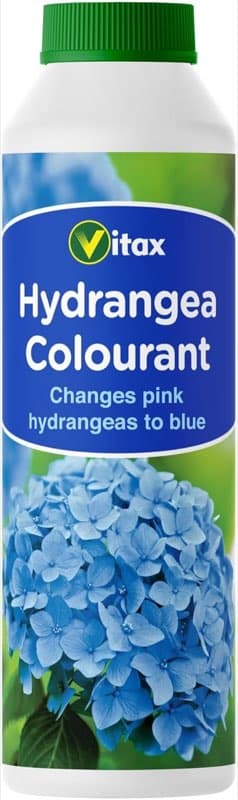
| Alternative |  Vitax Ltd Vitax hydrangea colourant, 500 g | Colourant | 500 g | Pale pink to blue | 9.8 | about £8.48 | View offer |
| Best value |  Westland Westland hydrangea colourant, 500 g | Colourant | 500 g title, 440 g | Pale pink to blue | 9.4 | about £6.99 | View offer |

On this page
Which hydrangeas can change
Plants that stay the colour they are
Acid soil, aluminium, and rainwater
A pot when the border will not move
Common questions
Which hydrangeas can turn blue?
Will my white one turn blue?
Will a panicle or an Annabelle turn blue?
What pH do I need?
Can I do this in chalk soil?
Should I use rainwater?
Why did the flowers go green in September?
Will a fertiliser change the colour?
Related pages
Sources
Public UK and maker sources from the research digest, used for this page in October 2026. Prices, stars and review counts are from the ten amazon.co.uk listings captured on 19 October 2026. Scores follow the 21 October 2026 shelf note. The NPK 8-4-12 line is the Vitax label, and it is not printed in the amazon bullets. Aluminium percentages and the eye-damage class are from the maker sheets named below, not from an amazon bullet. The March 2026 GOV.UK item was a consultation, not a shopping rule.
- RHS, shrubby hydrangea growing guide (retrieved 19 October 2026)
- RHS, acidifying soil (retrieved 19 October 2026)
- RHS, soil pH (retrieved 19 October 2026)
- Agriculture Act 1970, section 68 (retrieved 19 October 2026)
- Fertilisers Regulations 1991 (retrieved 19 October 2026)
- GOV.UK, new fertiliser regulations, 19 March 2026 (retrieved 19 October 2026)
- Vitax Hydrangea Feed label (retrieved 19 October 2026)
- Westland Hydrangea Colourant (retrieved 19 October 2026)
- Westland Hydrangea Colourant safety data sheet (retrieved 19 October 2026)