Independent comparisons. We may earn from shop links. More info

Garden lime buying guide

Updated: October 2026

You have a pH reading from last autumn, or you have none, and a bag on amazon.co.uk promises greener growth. This garden lime buying guide is the checklist before you pay, not the product table. Test the soil, name the material, then match the kilograms in the bag to the rate you will actually spread. Prices below are the GBP figures stored with the amazon.co.uk listings, not a live re-check. The [garden lime comparison](/hub/fertiliser-soil-and-bark-mulch/garden-lime) lines the eight ASINs up. Products Compared did not run a laboratory trial. A qualifying purchase can earn us a commission at no extra cost to you.

You have a pH reading from last autumn, or you have none, and a bag on amazon.co.uk promises greener growth. This garden lime buying guide is the checklist before you pay, not the product table.

Our top picks

On this page

Test the pH before you pay

Buy garden lime only after a current soil pH. The Royal Horticultural Society asks you to wait at least three months after the last lime, fertiliser, or organic matter, because a kit used too soon repeats the last dressing rather than the soil you have now. At pH 7.0 or above, leave the bag in the shop. Acid soil in the 5.1–6.0 band is the case for lime if you are not growing ericaceous plants. Rhododendron, camellia, heather, and blueberry want that acidity. Liming those beds is a buying mistake, not a light top-up. If you have not tested at all, the slogan on the carton does not replace the reading. How you spread a correction sits on how to apply garden lime.

Name the material, not the slogan

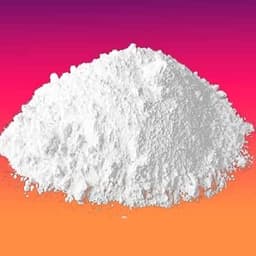
Garden lime, as the RHS uses the name, is finely ground limestone or chalk. The active ingredient is calcium carbonate. Typical neutralising value for ground limestone and chalk sits around 50–55. Calcified seaweed is calcium carbonate as well, with a typical neutralising value around 44, so you need more of it for the same job. Dolomite, or magnesian limestone, adds magnesium as well as calcium, with a typical value around 56. Buy it only when a test already shows magnesium is low. Hydrated lime is calcium hydroxide, with a typical value around 70, and it irritates skin and eyes. That comparison sits on garden lime or hydrated lime. Gypsum contains calcium without the carbonate that corrects acidity, so it is not a substitute. If the listing only says it improves soil fertility and never names a liming material, treat the slogan as incomplete.

Match the bag to the rate

A 4 kg box is large or tiny depending on the rate you meant. The RHS correction table, aimed at about pH 6.5 in the top 20 cm, uses roughly 0.4–1.8 kg per square metre. Westland's own UK page gives 10 g per square metre because the particles are very small. Those are different jobs. Do not average them. If you came to correct a tested acid clay, a 50 g jar and a 200 g algae pouch are the wrong objects. Crop rules sit on garden lime for vegetables. US square-foot coverage is not a UK kilograms-per-square-metre rate, and a star line is not a measured pH rise.

What the price bands are really selling

Entry prices on the stored listings are about £3.95 for 50 g of calcium carbonate powder and about £12.30 for 200 g of algae lime. The mid band is the garden-centre box. Westland's 2 × 4 kg conditioner is about £19.98 on a listed 8 kg. Topline's 4 kg lime plus 1.5 kg Epsom salts is about £18.95; Epsom salts are not lime. Upper prices buy a US lawn format, not a cheaper UK kilogram. Who each format is for sits on best garden lime.

Common questions

Do I need a soil test before I buy garden lime?
Yes, if you want the bag for soil rather than for a jar job the listing already names. The RHS wants a reading at least three months after lime, fertiliser, or organic matter. Without that number you cannot tell a correction from a slogan. A kit on a bed you limed last month will echo the dressing, not the soil.
What pH means I should not buy lime?
At pH 7.0 or above, the RHS says liming is unnecessary. Between 6.1 and 7.0, with 6.5 as the usual garden target, you normally add nothing. Skip lime on ericaceous beds even when the reading is acid, because those plants need that acidity.
Is garden lime the same as dolomite lime?
No. Garden lime is ground limestone or chalk, calcium carbonate, typical neutralising value about 50–55. Dolomite is magnesian limestone, typical value about 56, and you buy it only when a test shows magnesium is low. Extra magnesium on a high-magnesium clay is not wanted.
Is calcified seaweed the same strength as ground limestone?
It is still calcium carbonate, with a typical neutralising value around 44 against about 50–55 for ground limestone. You need more of it for the same correction. A 200 g pouch remains a sample, not an allotment dressing, whatever the trace-element claim.
How do I tell a correction rate from a box rate of 10 g per square metre?
The RHS table uses 0.4–1.8 kg per square metre to aim at pH 6.5 in the top 20 cm. Westland's FAQ rate of 10 g per square metre is a labelled top-up on that product, explained by very small particles. A 4 kg box covers about 4 m² at 1 kg per square metre and about 400 m² at 10 g. Do not treat those as one dose.
Is a 50 g or 200 g pouch enough for a bed?
Not for an RHS correction. Fifty grams will not cover a few square metres at about 1 kg per square metre. Two hundred grams of algae lime is the same problem at a higher shelf price. Use those pouches only for the jar jobs the listings name.
Does a high star score prove the bag will raise my soil pH?
No. Stars are a listing line, not a laboratory pH rise. One rating, or US-only review text, is not a UK trial. We did not test any ASIN. If the bullets describe car care, or the brand field disagrees with the title, the star line does not repair that.

Related pages

Sources

Public UK and maker sources from the research digest, used for this page in October 2026. Prices, stars and review counts are the figures stored with the eight amazon.co.uk listings, not a fresh shop check. A star line is not a measured pH rise. Hydrated lime is not one of these listings.

  1. RHS, lime and liming (retrieved October 2026)
  2. RHS, soil pH (retrieved October 2026)
  3. RHS, club root (retrieved October 2026)
  4. RHS, blossom end rot (retrieved October 2026)
  5. RHS, potato scabs (retrieved October 2026)
  6. AHDB, soil pH and liming recommendations (retrieved October 2026)
  7. Westland garden lime (retrieved October 2026)
  8. legislation.gov.uk, liming material (retrieved October 2026)