Cactus fertiliser liquid or granules
You have two packs in front of you: a bottle you dilute into the watering can, and a tub of granules you scatter and then forget. Cactus fertiliser liquid or granules is one decision. Liquid lets you control each watering, so you can stop when a UK autumn tells a desert cactus to rest. Granules save the measuring, and a slow-release grain does not know that it is November. Sprays and drips are a neighbouring habit, and they are only pointed to here. The wider checklist is the [cactus fertiliser buying guide](/hub/fertiliser-soil-and-bark-mulch/cactus-fertiliser/sub/cactus-fertiliser-buying-guide). The grid is the [cactus fertiliser comparison](/hub/fertiliser-soil-and-bark-mulch/cactus-fertiliser). Prices are amazon.co.uk shelf prices on 19 October 2026. Products Compared did not run a yield trial.
You have two packs in front of you: a bottle you dilute into the watering can, and a tub of granules you scatter and then forget. Cactus fertiliser liquid or granules is one decision.
You have two packs in front of you: a bottle you dilute into the watering can, and a tub of granules you scatter and then forget. Cactus fertiliser liquid or granules is one decision. Liquid lets you control each watering, so you can stop when a UK autumn tells a desert cactus to rest. Granules save the measuring, and a slow-release grain does not know that it is November. Sprays and drips are a neighbouring habit, and they are only pointed to here. The wider checklist is the cactus fertiliser buying guide. The grid is the cactus fertiliser comparison. Prices are amazon.co.uk shelf prices on 19 October 2026. Products Compared did not run a yield trial.
Our top picks
| Badge | Product | Form | Dose | Pack size | Note | Price | Offer |
|---|---|---|---|---|---|---|---|
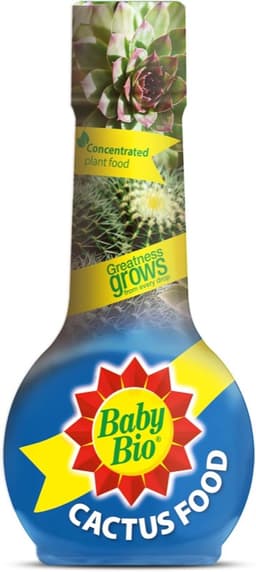
| Best overall |  Baby Bio Baby Bio cactus food, 175 ml | Liquid concentrate | 1:100 | 175 ml | 9.4 | about £3.99 | View offer |
| Alternative |  CULTIVERS CULTIVERS cactus granules, 250 g | Slow-release granules | Not stated | 250 g | 5.8 | about £11.66 | View offer |
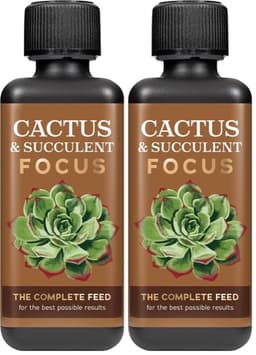
| Alternative |  Growth Technology Growth Technology Cactus Focus, pack of 2 | Liquid concentrate | 5:1000 | Two 300 ml bottles (600 ml) | 4.8 | about £13.96 | View offer |

On this page
What each format is doing
Liquids in this comparison
The granule in this comparison
When to pick which
Common questions
Should you buy a liquid cactus feed or granules?
What do you gain by diluting?
What do granules save?
Can you stop granules in a UK winter?
Does CULTIVERS state a rate?
Related pages
Sources
Public UK sources from the research digest, used for this page in October 2026. Prices, stars and review counts are from the ten amazon.co.uk listings captured on 19 October 2026. An NPK on a retailer page is not the amazon listing analysis. A pet-safety bullet is a listing claim. There is no laboratory test in this comparison.
- RHS, How to grow cacti and succulents (retrieved 19 October 2026)
- RHS, How to feed plants (retrieved 19 October 2026)
- RHS, How to grow Christmas cactus (retrieved 19 October 2026)
- RHS, Fertiliser labels explained (retrieved 19 October 2026)
- BCSS, The growing year (retrieved 19 October 2026)
- GOV.UK, Manufacturing and marketing fertilisers (retrieved 19 October 2026)
- The Fertilisers Regulations 1991 (retrieved 19 October 2026)
- ASDA, Baby Bio Cactus Food 175 ml (retrieved 19 October 2026)
- Ideal Home, Christmas cactus and sugar water (retrieved 19 October 2026)