Bonsai compost or akadama
A club page says leave multipurpose compost out of the pot, and an amazon.co.uk title says the bag suits every bonsai. Bonsai compost or akadama is that choice, with bark, grit and sand sitting between them. Akadama with pumice and lava is a granular mix. Fine multipurpose on its own stays out of the bonsai pot. None of the listings on the [bonsai compost comparison](/hub/fertiliser-soil-and-bark-mulch/bonsai-compost) names those granules. The Products Compared editorial team used club and RHS pages and the titles, updated 19 October 2026. A qualifying purchase can earn a commission at no extra cost to you.
A club page says leave multipurpose compost out of the pot, and an amazon.co.uk title says the bag suits every bonsai. Bonsai compost or akadama is that choice, with bark, grit and sand sitting between them.
A club page says leave multipurpose compost out of the pot, and an amazon.co.uk title says the bag suits every bonsai. Bonsai compost or akadama is that choice, with bark, grit and sand sitting between them. Akadama with pumice and lava is a granular mix. Fine multipurpose on its own stays out of the bonsai pot. None of the listings on the bonsai compost comparison names those granules. The Products Compared editorial team used club and RHS pages and the titles, updated 19 October 2026. A qualifying purchase can earn a commission at no extra cost to you.
Our top picks
| Badge | Product | Stated ingredients | Title volume | Drainage claim | Note | Price | Offer |
|---|---|---|---|---|---|---|---|
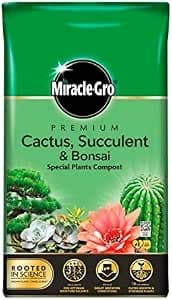
| Best overall |  Miracle-Gro Miracle-Gro cactus, succulent and bonsai compost 6 litres | Not stated on the Amazon bullets | 6 litres | Not stated on the bullets | 7.8 | about £9.79 | View offer |
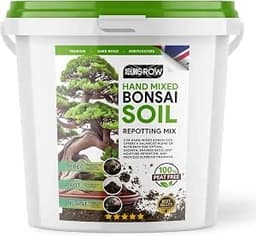
 UK GROW UK GROW Bonsai Focus 5 litre bucket | Composted bark, grit, fine sand | 5 litres | Superior drainage (listing) | 8.6 | about £10.99 | View offer | |
| Preis-Tipp |  UK GROW UK GROW bonsai potting mix 30 litres | Organic and inorganic, not named | 30 litres | Aeration; moisture without waterlogging (listing) | 6.6 | about £18.99 | View offer |

On this page
Three different things sold as bonsai soil
What clubs put in the pot
The RHS route if you mix at home
When compost, when akadama
Common questions
Is akadama a compost?
Can I use multipurpose compost for bonsai?
What mix do UK clubs describe for maples and for pines?
What if I will not buy imported clay?
Does akadama feed the tree?
Why not use akadama on its own in Britain?
Is a bark, grit and sand bucket the same thing as akadama?
Related pages
Sources
Public UK sources from the research digest, used for this page in October 2026. Prices, stars and review counts are the figures stored from the eleven amazon.co.uk listings in this set. A drainage line, an all-types line and a peat-free line are listing claims. This is not a laboratory test. Selling peat compost was not shown to be an England-wide offence on 19 October 2026.
- RHS, bonsai advice (retrieved October 2026)
- RHS, peat-free exhibitor tips (retrieved October 2026)
- RHS, retail peat-free from January 2026 (retrieved October 2026)
- GOV.UK, Defra peat sales announcement, 27 August 2022 (retrieved October 2026)
- UK Parliament deposited paper DEP2026-0072, 29 January 2026 (retrieved October 2026)
- Bonsai4me, an introduction to bonsai soils (retrieved October 2026)
- Cheshire Bonsai Society, Japanese maples as bonsai (retrieved October 2026)
- BBC Gardeners’ World, indoor bonsai tree care (retrieved October 2026)