Independent comparisons. We may earn from shop links. More info

How to use a DeWalt combi drill

Updated: 23 October 2026

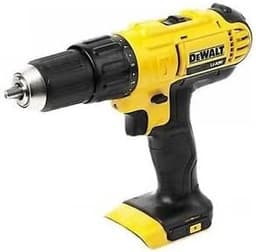
A stripped screw head or a twisted wrist is usually a collar setting, not a weak drill. Hammer mode and drill mode on a DeWalt combi disable the numbered clutch, so the tool keeps turning if a bit binds. This is how to use a DeWalt combi drill: battery off to change a bit, gear only while the chuck is still, then the collar for the job in front of you. The steps follow DeWalt's DCD701 and DCD706 manual. The [DeWalt cordless drill comparison](/hub/drilling-and-accessories/de-walt-cordless-drill) is where the kits are lined up. Products Compared did not film a setup. If you buy through our amazon.co.uk links, we may earn a commission at no extra cost to you.

A stripped screw head or a twisted wrist is usually a collar setting, not a weak drill. Hammer mode and drill mode on a DeWalt combi disable the numbered clutch, so the tool keeps turning if a bit binds.

Our top picks

DeWalt DeWalt DCD796P1-GB

Best overall

DeWalt DeWalt DCD796P1-GB
9.4/10about £119.98
DeWalt DeWalt DCD701D2-GB

Alternative

DeWalt DeWalt DCD701D2-GB
9.4/10about £138.64
DeWalt DeWalt DCD776

Best value

DeWalt DeWalt DCD776
9.2/10about £54.50
On this page

Fit the bit with the battery off

Take the battery off the foot before you open the chuck. DeWalt's manual tells you to insert the bit about 19 mm into a keyless chuck, then tighten by hand. Do not pull the trigger to close the chuck. Closing it under power is how jaws grab unevenly. A spindle lock lets you grip the chuck while the motor is stopped. It is not an invitation to run the drill with your hand on the sleeve. Seat a screwdriver bit so the hex is inside the jaws. A twist bit or a short masonry bit uses the same 19 mm insertion. A reviewer on the DCD776 said the chuck would not hold bits in mild steel and brick. That can be a faulty chuck, or a sleeve that was never tightened. Put the battery back only when your hand is off the chuck. The DeWalt cordless drill buying guide is where you confirm a battery was even in the box.

Pick a gear while the tool is stopped

These drills have two speeds. Change gear only when the chuck has stopped. Shifting while it is spinning is how the gearbox grinds. Speed 1 is the slow gear: screws, large holes, and torque. Speed 2 is the fast gear: small pilots, and clearing a hole once the bit is tracking. A 4 mm pilot for a hinge can be speed 2. The screw belongs in speed 1, on a clutch number, not in speed 2 with the drill symbol selected. Screws stay in the slow gear. The DCD701 never gets a hammer step, which is why it sits on a different platform.
DeWalt DeWalt DCD796P1-GB

Testsieger

DeWalt DeWalt DCD796P1-GB
9.4/10about £119.98

Set the collar

The collar has numbers, a drill symbol, and on a combi a hammer symbol. The numbers are the clutch. Start low for a small screw in plasterboard or a hinge leaf. Move up a number if the clutch clicks before the head is seated, and down if the head sinks or the bit cams out. If you never hear the click, you are probably on the drill symbol, where the clutch is out of the circuit. Use the drill symbol for holes in wood and metal. Use the hammer symbol only with a masonry bit, in the fast gear, with a light lean, for a short plug hole in soft brick or block. Bouncing means the bit is leaving the hole. The DCD701 does not state a hammer, and the DCD706 steps in the same PDF are for a model that is not listed here. Drill mode and hammer mode both disable the clutch.

Masonry, dust, and the point to stop

A few plug holes in soft masonry are what the hammer on these combis is for. A concrete lintel, a row of frame anchors, or a core hole is where you put the combi down. The mechanism difference is on the DeWalt combi drill vs SDS page. Look for cables and pipes before any hole in a wall. Concrete and mortar dust are a silica problem. HSE sheet CN3 treats that dust as a health hazard. For more than a scuff, use extraction or a suitable respirator, and keep other people out of the room. At work, the action value is 2.5 m/s² A(8) and the limit is 5.0 m/s² A(8). HSE's screen treats hammer-action tools above about 15 minutes a day as medium risk and above about an hour as high risk. That is a prompt to reassess, not a measurement of your drill. Stop if the wrist twists, the bit smokes, or the hole takes minutes.

Common questions

How do I change a bit?
Take the battery off, open the chuck by hand, insert the bit about 19 mm, and tighten the sleeve by hand. Do not hold the trigger to spin the chuck closed. Put the battery back only when your hand is clear. If the jaws look uneven, open them and seat the bit again.
Which gear is for screws?
Use speed 1, the slow gear, and a clutch number rather than the drill symbol. Shift only after the chuck has stopped. Speed 2 is for small pilots and for pace, not for driving a long screw into timber. A hinge screw in speed 2 is how the head strips.
What do the clutch numbers do?
They set how much resistance it takes before the clutch clicks and stops driving the bit. A low number suits small screws and thin leaves. A higher number suits a larger screw. If the head strips, drop a number or two and stay in the slow gear.
When do I use the hammer symbol?
Use it with a masonry bit, in the fast gear, with light pressure, for a short plug hole in soft brick or block. It will not clutch out if the bit binds. Do not select it for screws, and do not look for it on the DCD701, which has no hammer stated.
Why did the screw head strip?
The usual causes are the drill symbol instead of a clutch number, speed 2 instead of speed 1, or a worn bit that no longer fits the recess. Set a lower number, use the slow gear, and replace the bit. Pushing harder on a cammed-out head makes the damage worse.

Related pages

Sources

Public sources and amazon.co.uk listings used for this comparison. Listings read on 20 October 2026.

  1. DeWalt DCD799P2T-GB product page (retrieved 20.10.2026)
  2. DeWalt DCD796 product page (retrieved 20.10.2026)
  3. DeWalt DCD701 product page (retrieved 20.10.2026)
  4. DeWalt product registration (retrieved 20.10.2026)
  5. BSI BS EN 62841-2-1, hand-held drills and impact drills (retrieved 20.10.2026)
  6. HSE hand-arm vibration regulations (retrieved 20.10.2026)
  7. HSE vibration risk assessment and time bands (retrieved 20.10.2026)
  8. HSE PUWER overview (retrieved 20.10.2026)