Independent comparisons. We may earn from shop links. More info

SDS drill vs combi drill

Updated: 22 October 2026

The hammer setting is on, and leaning harder only polishes the dust. This SDS drill vs combi drill guide is for that stall: a combi drill not drilling brick, and whether to persist or change the mechanism. A combi's hammer tick vibrates the chuck through ratchet plates. An SDS plus rotary hammer strikes the bit with a piston. Soft common brick and a small plug can stay on the combi. Engineering brick, a concrete lintel, and chasing should not. The cordless models we compared on amazon.co.uk are in the [cordless rotary hammer comparison](/hub/drilling-and-accessories/cordless-rotary-hammer). A qualifying purchase can earn us a commission at no extra cost to you.

The hammer setting is on, and leaning harder only polishes the dust. This SDS drill vs combi drill guide is for that stall: a combi drill not drilling brick, and whether to persist or change the mechanism.

Our top picks

Ryobi Ryobi R18SDS-0 body

Best overall

Ryobi Ryobi R18SDS-0 body
9.0/10about £90.29
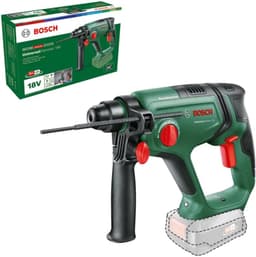
Bosch UniversalHammer 18V body

Alternative

Bosch UniversalHammer 18V body
8.5/10about £97.92
Dong Cheng Dong Cheng 2.1 J kit

Best value

Dong Cheng Dong Cheng 2.1 J kit
8.5/10about £79.99
On this page

Two different hammers

A hammer setting is not a small SDS. On a combi, ridged plates bump a clamped chuck along its axis, so the blow is only as strong as those plates plus your weight on the handle. An SDS plus rotary hammer lets the shank move a short distance, and a piston hits the end of the bit. Impact on the SDS is quoted in joules. Many SDS plus tools can stop the rotation and leave the piston running, so a light chisel works. A combi has no rotation-stop. A stall a couple of centimetres in is the ratchet limit, not a flat battery. On one Dong Cheng listing, shoppers said a Black and Decker stopped at about 2 cm.

Jobs a combi still does

Keep the combi for screws, timber, thin steel, and a thin slice of soft masonry. An SDS plus will turn a driver bit, though it is a clumsy screwdriver: nose-heavy, long, and awkward on a cabinet. If the afternoon is mostly fixings and one or two plugs, the combi is the better tool, provided the brick is ordinary and the hole stays small. A rule of thumb, not a lab result, is that 6–8 mm in ordinary brick can still be a combi job. Stop if one hole takes more than about 30 seconds with no progress. A hot bit and pale dust do not. Joules and battery family are in the buying guide once the ratchet is the wrong hammer.
Ryobi Ryobi R18SDS-0 body

Testsieger

Ryobi Ryobi R18SDS-0 body
9.0/10about £90.29

Jobs that want SDS plus

You need an SDS drill for concrete lintels, engineering brick, holes past the mid-teens of millimetres, and chasing a cable channel. One UK guide steps up above about 12–13 mm. Another uses about 16 mm, plus those harder materials. If the combi stops in engineering brick, do not average the numbers. Chisel mode is the other limit. Lifting a tile or opening a chase is hammer-only work, and a combi cannot park the rotation and keep a blow. A builder should take over if the chase is structural, the lintel is cracked, or you cannot tell what is behind the plaster. The how to drill masonry page assumes the SDS plus is already in your hands. Mixed work means owning both.

Bits do not swap

An SDS plus shank is a dedicated shape. It slides, locks, and takes the blow on its end. A combi bit has a round or hex shank for a three-jaw chuck. You cannot seat an SDS plus bit in a combi chuck, and a smooth masonry bit will not lock in an SDS holder. An adapter that adds a spinning chuck to a piston tool is a poor match for the lintel that beat the combi. Buy SDS plus bits in the diameters your plugs need, and retire a bit that has glazed.

Common questions

Is a combi with a hammer setting a small SDS?
No. The hammer setting rattles the chuck with ratchet plates while the bit stays clamped. An SDS plus rotary hammer lets the bit slide and strikes it with a piston, which is why impact is quoted in joules. A combi has a clutch for screws. Many SDS plus tools have a rotation-stop for light chiselling, which a combi does not. More pressure on a stalled combi does not turn those plates into a piston.
Will a combi do plug holes in soft brick?
Often, when the brick is ordinary and the hole is about 6–8 mm. That is a rule of thumb from UK drilling guides, not a promise for every wall. Stop if one hole takes more than about 30 seconds with no progress. Pale dust and a bit that only polishes are the signs to change tool. Engineering brick and concrete sit outside this pocket even at a small diameter.
Why did it stop after about 20 mm?
The ratchet has run out of useful blow. Leaning harder does not add a piston. Shoppers who moved to a cordless SDS plus describe a combi that dies a couple of centimetres into brick, including a Black and Decker that reviewers said stopped at about 2 cm. Treat that as comment on amazon.co.uk, not as a timed test. A fresh bit helps only in soft brick.
Can I put an SDS bit in a combi chuck?
No. An SDS plus shank slides and locks in an SDS holder. A three-jaw chuck clamps a round or hex shank. Forcing the flutes into the jaws damages the bit and does not create a piston strike. A normal masonry bit will not lock in an SDS plus holder either. Buy SDS plus bits with the rotary hammer, in the diameters your plugs use, and leave the old masonry bits with the combi.
Can an SDS drive screws all day?
It can turn a driver bit, and it is a poor choice for a day of screws. The tool is long, the nose is heavy, and the clutch you use on a combi is not why this mechanism exists. A UK buying guide treats an SDS as a weak screwdriver for that reason. Keep the combi for cabinets, brackets, and plasterboard. Use the SDS plus when the hole needs the piston, then put it down.
What about concrete lintels?
A concrete lintel is an SDS job, even at a diameter that would have been fine in soft brick. UK guides set the combi aside here, with engineering brick and chasing. Do not hold the trigger while the bit glazes. If the lintel is cracked, or you cannot tell it from a beam that carries the floor, get a builder before you open it. Drilling a sound lintel for a fixing is ordinary DIY. Changing the lintel is not.

Related pages

Sources

Public UK sources from the research digest, last checked on 19 October 2026. Shelf prices and star lines are the amazon.co.uk figures in the display file.

  1. HSE, Control of Vibration at Work Regulations 2005 (retrieved 19 October 2026)
  2. HSE, vibration risk groupings (retrieved 19 October 2026)
  3. HSE, CN3 drilling with hand-held rotary tools (retrieved 19 October 2026)
  4. HSE, noise duties (retrieved 19 October 2026)
  5. GOV.UK, Supply of Machinery (Safety) Regulations 2008 (retrieved 19 October 2026)
  6. SDS Drill UK, advice when buying an SDS drill (retrieved 19 October 2026)
  7. Bosch Professional UK, GBH 18V-22 X (retrieved 19 October 2026)
  8. Ryobi UK, R18SDS-0 (retrieved 19 October 2026)