Independent comparisons. We may earn from shop links. More info

How to dispose of wood burner ash

Updated: 23 October 2026

The ash pan is full, the stove is out, and grey dust can still hide embers that light a wheelie bin hours later. How to dispose of wood burner ash is a sequence: let the fire die with the door shut, move small amounts into a metal can with a lid, keep that can outside, and only then follow your council for cold ash. HETAS tells you not to leave ash in the bucket indoors. Oxfordshire Fire and Rescue adds the garage, the shed and a timber deck. Shelf prices are on the [ash bucket comparison](/hub/diy-supplies/ash-bucket). We did not time a bucket of embers. A qualifying purchase can earn a commission at no extra cost to you.

The ash pan is full, the stove is out, and grey dust can still hide embers that light a wheelie bin hours later.

Our top picks

On this page

Use a metal can, not the household bin

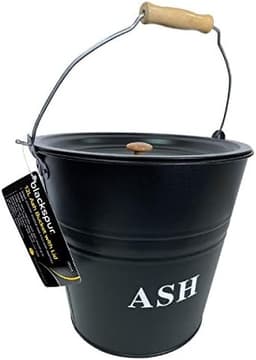
The container is a metal ash bucket with a lid that closes, and gloves you can work in. HETAS pairs those with a sealed can and a trip outside. A plastic bucket, a cardboard box or a paper sack is how a spark finds something to burn. Take the ash in small shovelfuls. Fit the lid before you move. If the lid only sits when the handle is upright, set the handle, seat the lid, then lift. The can buys you a controlled walk. It does not make fresh embers safe to park in the hall.

How long the published advice actually says

The public pages do not agree on one wait, so follow the stricter page that applies to you. HETAS says the ash needs sufficient time to cool, and it prints no number of hours. Sutton Council says ash should stay in a metal bucket for at least 24 hours, or be fully dampened, before general waste. Dorset and Wiltshire Fire and Rescue say ash can take several days to cool, and they tell you to wet it before the lid goes on for disposal. Greater Manchester Fire and Rescue’s guidance for a chimney fire is to keep water off the appliance, get everyone out, and call 999. Wetting belongs on ash in the metal can, outside. Collapsing those lines into one hour count would invent a figure none of these pages printed.

Where the bucket must not sit

Oxfordshire’s list is the storage rule while the can is still warm. The metal bucket does not stay in the house, the garage or the shed, and it does not sit on a timber deck. A hard surface outside, clear of the log store and the fence, is the place once you have taken that warning seriously. Denbighshire says you should never put ash straight into a bin. The wheelie bin is plastic, and warm ash does not belong in it. When the ash is cold, the bin rule becomes your council’s rule. Worcestershire allows cold wood ash in home compost and sends cold coal ash and briquettes to the rubbish. What cold wood ash may do on soil is on the wood ash or coal ash page.

When this is no longer a bucket job

Stop when the carbon monoxide alarm sounds, when you suspect a chimney fire, or when you are about to scrape the firebox bare against the manual. A new fixed solid-fuel appliance in England falls under Approved Document J, which expects a BS EN 50291 alarm in the same room, about 1 to 3 metres from the appliance. If it sounds, get out and call 999 rather than finishing the ash pan. Sweeping is separate. HETAS gives a general rule of quarterly sweeps for a wood appliance in use. Dorset and Wiltshire say at least twice a year. Emptying the pan every few days replaces neither of them.

Common questions

Can I put warm ash in a plastic wheelie bin?
No. Warm ash belongs in a lidded metal can, outside, away from the house and from decking. A plastic bin can melt or catch when an ember is still alive. Denbighshire’s note says not to put ash straight into a bin. Wait until your council’s page would call the ash cold, then use the stream that page names.
How long should I wait before the ash goes in the rubbish?
Use the page that covers you. Sutton says at least 24 hours in a metal bucket, or ash that has been fully dampened, before general waste. Dorset and Wiltshire say several days, with the ash wetted before the lid goes on for disposal. HETAS says sufficient time and gives no hour count. Do not average those into a number they did not print.
Should I wet the ash?
Oxfordshire and Dorset and Wiltshire both say to wet ash you are making safe to dispose of, and Sutton allows full dampening as an alternative to the 24-hour wait. Do that to ash in the metal can, outside. Do not pour water into a lit stove, and do not pour water on a stove during a chimney fire. Greater Manchester’s guidance for that emergency is to leave the appliance and call 999.
Where can the metal bucket sit while it cools?
Outside, lid on, clear of the house, the garage, the shed, and any timber deck. Oxfordshire Fire and Rescue lists those places because that is where hot ash starts secondary fires. Keep the can away from the log pile as well. Indoors is the convenience HETAS tells you to refuse.
Do I leave some ash in the stove?
Only if the stove manual tells you to. HETAS notes that some appliances want a small ash bed left in place, and the instructions for that model decide it. Scraping every stove to bare metal can be the wrong move. Read the manual before you empty the pan into the bucket.
Are the gloves in a bucket set for loading the fire?
Treat them as light gloves for cold ash unless the listing says otherwise. A reviewer of a BRIAN & DANY set said the included gloves were not for loading firewood. Loading the stove needs the gloves the stove guidance names. A glove does not make a plastic bin safe.
Who do I call if the carbon monoxide alarm sounds?
Leave the building and call 999. The BS EN 50291 alarm expected under Approved Document J for a new fixed solid-fuel appliance warns you about the air. It is not a prompt to open the stove and finish the ash. The same call applies if you think the chimney is on fire. Bucket size can wait until the fire service has dealt with the incident.

Related pages

Sources

Public UK sources from the research digest, plus the amazon.co.uk listings compared on this page. Listing prices stored 19.10.2026. Page updated 23 October 2026.

  1. HETAS: Safe disposal of stove ash (retrieved 19.10.2026)
  2. Oxfordshire Fire and Rescue: Hot ashes (retrieved 19.10.2026)
  3. GOV.UK: Smoke control area rules (retrieved 19.10.2026)
  4. Defra: Ready to Burn (retrieved 19.10.2026)
  5. Approved Document J circular, BS EN 50291 (retrieved 19.10.2026)
  6. Dorset and Wiltshire Fire and Rescue: Chimney safety (retrieved 19.10.2026)
  7. Sutton Council: Rubbish and recycling (retrieved 19.10.2026)
  8. RHS: Using wood ash in the garden (retrieved 19.10.2026)