Plasma cutter pilot arc versus a contact start
The plate is painted, rusty or mesh, and a contact torch will not start until you grind a bright patch. A plasma cutter pilot arc is a start method, not a thickness upgrade, and high frequency is not blowback. This page says which of the four amazon.co.uk listings is contact and which are written as non-touch. Prices are from 19 October 2026. Peter F., the DIY & tools editor, did not fire these torches in a lab. A qualifying purchase can earn a commission at no extra cost to you. The table is on the [plasma cutter comparison](/hub/cutting-tools/plasma-cutter).
The plate is painted, rusty or mesh, and a contact torch will not start until you grind a bright patch. A plasma cutter pilot arc is a start method, not a thickness upgrade, and high frequency is not blowback.
The plate is painted, rusty or mesh, and a contact torch will not start until you grind a bright patch. A plasma cutter pilot arc is a start method, not a thickness upgrade, and high frequency is not blowback. This page says which of the four amazon.co.uk listings is contact and which are written as non-touch. Prices are from 19 October 2026. Peter F., the DIY & tools editor, did not fire these torches in a lab. A qualifying purchase can earn a commission at no extra cost to you. The table is on the plasma cutter comparison.
Our top picks
| Badge | Product | Start type | Lighting claim | Torch | Note | Price | Offer |
|---|---|---|---|---|---|---|---|
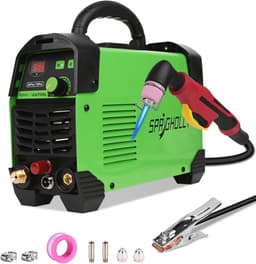
| Best overall |  SPRIGHOLLY SPRIGHOLLY CUT50L plasma cutter | HF non-contact | High frequency | AG60, 4 m | 10.0 | about £67.83 | View offer |
| Best value |  Reboot Reboot 45 A plasma cutter | Pilot, non-touch | Not printed | Pilot arc torch | 9.0 | about £103.67 | View offer |
| Alternative |  SPRIGHOLLY SPRIGHOLLY CUT50 contact plasma cutter | Contact / direct arc | Title also says HF | PT31 | 6.4 | about £99.73 | View offer |


On this page
Contact start needs bare metal
What pilot arc means on these three boxes
High frequency is not blowback
The earth clamp is still a contact
Common questions
What is the difference between contact start and pilot arc?
Can a contact cutter start on paint?
Is high frequency the same thing as pilot arc?
Which of these four is contact-only?
Will an HF cutter upset a workshop PC or CNC?
Do I still grind a clean earth point?
Related pages
Sources
Public UK sources and the amazon.co.uk listings in this set, checked on 19 October 2026.
- HSE WL15: Welding fume (retrieved 19 October 2026)
- HSE: Cutting metals and similar fume (retrieved 19 October 2026)
- HSE: Noise (retrieved 19 October 2026)
- Control of Noise at Work Regulations 2005, regulation 7 (retrieved 19 October 2026)
- Electrical Equipment (Safety) Regulations 2016, regulation 35 (retrieved 19 October 2026)
- OPSS: Vevor plasma cutter CUT-40, 30 June 2023 (retrieved 19 October 2026)
- ESAB UK: Tips for buying a manual plasma cutter (retrieved 19 October 2026)
- R-Tech: Plasma cutting FAQs (retrieved 19 October 2026)